Sri Lanka Travel Tips 2026 25 Things Every First-Time Visitor Must Know Before They Go
Planning your first trip to Sri Lanka in 2026? These are the 25 essential travel tips every foreigner must know — visa, money, transport, safety, culture, health, costs, and the honest truths no tourist brochure tells you.
The Island That Rewards the Prepared Traveller
Sri Lanka welcomed over 317,000 foreign tourists in just the first 35 days of 2026 — a number that signals something real: the world has rediscovered this island, and is arriving faster than ever before.
Sri Lanka is a vibrant, welcoming island nation in the Indian Ocean known for its diverse landscapes, rich culture, ancient history, and warm hospitality — offering everything from breathtaking beaches and wildlife safaris to ancient cities, lush hill country, and world-class cuisine.
But Sri Lanka also rewards preparation and punishes assumption. The traveller who arrives without understanding the ETA visa system, the jeep pricing structure at Yala, the temple dress code, or the reality of the train booking system will spend their first two days fixing problems that should have been solved at home.
This guide is the preparation. Twenty-five honest, specific, practical tips for first-time visitors to Sri Lanka in 2026 — written with Yala National Park as the wildlife anchor of the trip, and covering everything from the airport exit to the flight home.
Visa and Entry
Tip 1: Get Your ETA Before You Fly — Only From the Official Site
Travellers planning to visit Sri Lanka must obtain an Electronic Travel Authorization (ETA) before arrival, as mandated by the Department of Immigration and Emigration. The ETA is required for short stays including tourism and holiday visits, and can be applied for online before travel.
The ETA costs USD 50 for most nationalities, allows a double-entry stay of up to 30 days, and is processed online at eta.gov.lk — the only legitimate government portal. Apply at least 3–5 days before departure. Most applications are approved within 24 hours, but last-minute applications carry unnecessary risk.
The scam to avoid: Dozens of third-party websites imitate the official ETA portal and charge USD 70–100 for the same service. Use only eta.gov.lk. The URL is the test — if it is not the exact government domain, close the browser and start again.
Nationalities exempt from ETA: Citizens of Singapore and Maldives currently receive visa-on-arrival arrangements. All other major nationalities — UK, USA, Australia, Germany, France, Netherlands, Canada — require the pre-obtained ETA. Verify current requirements at the official Sri Lanka Department of Immigration website before travel as these occasionally change.
Tip 2: Keep a Digital and Physical Copy of Your ETA
The ETA confirmation email should be downloaded as a PDF and stored both on your phone (offline, not cloud-dependent) and as a printed copy in your travel documents. Immigration at Bandaranaike International Airport occasionally requests physical evidence rather than simply scanning a QR code. Having both formats prevents delays.
Your ETA reference number and your passport must match exactly. If you have renewed your passport since applying for the ETA, you will need a new ETA for the new passport number.
Tip 3: Yala National Park Requires Your Passport at the Gate
This is the most frequently forgotten preparation item for the Yala leg of the trip. The Department of Wildlife Conservation requires a valid passport for all foreign visitors at the Palatupana Gate for ticket purchase. A phone photograph of your passport is not accepted. A driving licence is not accepted.
Carry your actual passport with you on safari day. Put it in your daypack the night before. This is non-negotiable.
Money and Costs
Tip 4: Sri Lanka Is More Affordable Than You Expect — But Not as Cheap as It Was
Sri Lanka's travel industry is thriving with millions of visitors each year, and pricing has adjusted accordingly since the post-2022 recovery. The island is not as cheap as it was five years ago, but it remains extraordinary value by Western European and Australian standards.
Realistic daily budgets in 2026:
Travel Style Daily Budget Per Person
Budget backpacker USD 35–55
Mid-range independent traveller USD 70–120
Comfortable (boutique hotels, private transport) USD 150–250
Luxury (premium lodges, safari included) USD 300–600+
The biggest single-day cost spike happens at Yala National Park — where foreign visitor entrance fees of USD 35–42 per person plus jeep hire can produce a USD 90–100 day before accommodation. Budget for this specifically and do not let it derail the rest of your trip's economics.
Tip 5: Carry Cash — Sri Lanka Is Still Primarily Cash-Based Outside Cities
ATMs are available in all major towns and tourist centres, but Sri Lanka outside Colombo, Galle, and Kandy is overwhelmingly cash-dependent. Card payment is accepted at upmarket hotels, major restaurants in tourist areas, and park ticket offices — but local restaurants, tuk-tuks, guesthouses in smaller towns, temple entry fees, and most market transactions require cash.
Withdraw sufficient Sri Lankan Rupees in Colombo or at the airport ATMs on arrival. ATMs in Tissamaharama (the Yala gateway town) function but run out of cash on peak-season weekends. Withdraw before arriving in the south.
The current exchange rate as of May 2026: approximately LKR 300–310 per USD 1 (verify current rates before travel — the rate has fluctuated significantly over the past three years).
Tipping: Expected and meaningfully appreciated. Standard tips: safari driver/guide USD 5–10 per person after a half-day drive; hotel housekeeping LKR 200–500 per night; tuk-tuk driver rounding up the fare; restaurant service 10% if not included in the bill.
Tip 6: The Two-Tier Pricing System Is Real — And Legal
Sri Lanka operates a formal two-tier pricing system at almost all major attractions. Foreign visitors pay significantly higher entry fees than Sri Lankan citizens. At Sigiriya, the foreign visitor fee is approximately USD 35 versus LKR 100 (approximately USD 0.32) for Sri Lankan nationals. At Yala, foreign visitor park fees are approximately USD 35–42 per person.
This is not a scam. It is official government policy designed to generate tourism revenue while maintaining access for local communities. It is also significant — foreign visitors doing three or four Cultural Triangle sites plus Yala will spend USD 150–200 in entry fees alone. Budget for this before you go.
Tip 7: Negotiate Tuk-Tuk Prices Before You Get In — Every Time
Tuk-tuks are the primary short-distance transport throughout Sri Lanka. They do not have meters in most towns outside Colombo (where the PickMe app provides metered rides). The price is negotiated before the journey, not after.
Establish the price before sitting down. If the first quote is significantly higher than what you expected, make a counter-offer — the gap between the first offer and the eventual agreed price in tourist areas is typically 30–50%. State your destination clearly, agree the number, confirm it is the total price, and you are done.
The PickMe app operates in Colombo and increasingly in larger cities — use it for transparent, meter-based rides that eliminate negotiation entirely.
Transport
Tip 8: Book the Kandy to Ella Train Immediately — Not Eventually
The train network is famous for its scenic routes, especially the line from Colombo to Kandy and Nuwara Eliya through misty mountains and tea plantations — often cited as one of the most beautiful train rides in Asia.
The Kandy to Ella train journey (or the shorter Nanu-Oya to Ella section) is the single most popular travel experience in Sri Lanka and the booking that sells out fastest. Second-class reserved seats and first-class observation car seats on this route book out weeks — sometimes months — in advance during peak season (December–April).
Book this train on the Sri Lanka Railways website the moment your trip dates are confirmed. Do not assume you can buy it on arrival or a few days before. The 3rd class unreserved carriage is always available and is the authentic local experience — but the reserved seat is the sensible choice for a long journey.
Tip 9: Use Private Vehicles for the Yala Leg — Public Transport Is Impractical Here
For most of the Sri Lanka circuit, a combination of trains, buses, and tuk-tuks is perfectly adequate. For the Yala safari specifically, a private vehicle is strongly recommended.
The reasons: the 4:30 AM jeep pickup for the morning safari is incompatible with any public transport timetable; the drive from Ella to Tissamaharama via Wellawaya (2.5 hours) is served by buses that run irregularly and require transfers; and the onward journey from Yala to the south coast is most efficiently handled by a vehicle that knows the route and can stop for roadside wildlife encounters en route.
Either hire a private driver for the full Sri Lanka circuit (USD 60–90 per day including vehicle, negotiated in advance), or arrange specifically a private transfer for the Ella–Yala–south coast leg through your Tissamaharama accommodation.
Tip 10: The Southern Expressway Is the Fastest Route South — Use It
From Colombo to Galle, Mirissa, or the Yala gateway via Hambantota, the Southern Expressway (E01) reduces driving times dramatically compared to the coastal A2 road. Colombo to Galle takes approximately 1.5 hours via the expressway versus 3+ hours on the old road. Colombo to Hambantota (for the Yala approach) takes approximately 2.5 hours via expressway.
If your driver suggests the coastal route for scenic value on the first day, it is worth accepting — the experience of the southern coast road through Bentota, Hikkaduwa, and Ambalangoda is genuinely beautiful. But for any transit leg where time matters (early morning safari departures, flight connections), insist on the expressway.
Safety
Tip 11: Sri Lanka Is Safe — But Protect Yourself From Touts and Scams, Not Crime
Sri Lanka is experiencing a tourism revival in 2026, with improved political stability and better air connectivity positioning it as a high-value destination. Violent crime against tourists is extremely rare. The safety concerns first-time visitors actually encounter are almost entirely financial rather than physical: overcharging, commission-based referrals, and the jeep-pricing scam at Yala.
The most important safety rules for Sri Lanka in 2026:
Book accommodation and safaris in advance. Accommodation with good reviews and a confirmed booking means no dependency on street touts who earn commission from referring you to inferior alternatives.
Ignore the train station touts. In Colombo Fort station and Kandy station, freelance "guides" approach foreigners to assist with ticket purchase and then steer them toward overpriced tours. Tickets are sold at the official windows. The queues are straightforward. No assistance is required.
Do not pay for the Yala safari before confirming the all-inclusive price includes park entry. The most common Yala scam is quoting a jeep price that excludes the USD 35–42 government park ticket — producing a shock at the gate. Always confirm: "Is this the total price including the park entry ticket for foreigners?"
Tip 12: Ocean Safety — Rip Currents Kill More Tourists Than Anything Else
Sri Lanka's south and west coast beaches are beautiful and frequently dangerous. Rip currents claim tourist lives every year — particularly on unsupervised beaches between November and March when the southwest monsoon creates strong underwater currents that are invisible from the surface.
Always swim at beaches with lifeguard flags. Mirissa, Unawatuna, and the main Bentota beach have supervised sections. Many of Tangalle's beaches are unsupervised and have claimed lives.
Never swim alone. The rip current scenario — being swept out faster than you can swim back — is survivable if you know to swim parallel to the shore rather than against the current, and to signal for help immediately. It is not survivable if you are alone and nobody sees you go.
Heed red flags absolutely. A red flag on a Sri Lankan beach means the water is dangerous. This is not a suggestion.
Tip 13: Sun Protection Is a Medical Priority, Not a Cosmetic One
Sri Lanka sits at approximately 6–8 degrees north of the equator. The UV index during the dry season regularly reaches 11–12 — classified as "extreme" by the World Health Organisation. At this level, unprotected fair skin can begin to burn within 10–15 minutes.
Apply SPF 50+ broad-spectrum sunscreen 30 minutes before any outdoor activity. Reapply every 90 minutes. Use a wide-brimmed hat. During a Yala morning safari (6 AM–10 AM) in an open jeep, the UV exposure is substantial even in the early morning hours. Sunburn on day one of a two-week trip is not a minor inconvenience — it is a genuine medical problem that affects every subsequent day.
Culture and Customs
Tip 14: Temple Dress Code Is Non-Negotiable — Cover Shoulders and Knees
Every Buddhist temple, Hindu temple, and religious site in Sri Lanka requires visitors to cover shoulders and knees. This applies to all genders. Sleeveless tops, shorts, and short skirts require either changing or using the sarongs available for rent at most major temple entrances.
The most commonly caught-out visitors are those arriving directly from the beach in swimwear cover-ups. A light linen shirt and lightweight trousers in a small daypack costs nothing in terms of weight and prevents the situation of being refused entry to Sigiriya, Dambulla, or the Temple of the Tooth after a 4-hour drive to reach them.
Remove shoes before entering any temple or shrine. This is not optional — it is a requirement enforced at every religious site on the island without exception.
Tip 15: The Left Hand Rule — Food and Greetings
Sri Lankan culture, consistent with South Asian tradition, considers the left hand impure. In practice, this means: eat with your right hand if eating with hands (as is customary with rice and curry), pass money and objects with your right hand, and receive items with your right hand.
For most Western visitors, this is a minor adjustment. The situations where it matters most are temple contexts, when receiving food from a host, and when handing money to a market vendor. Being aware of the convention and making the effort is noticed and appreciated.
Tip 16: Photography at Temples — Ask Before Photographing People
Photography of temple architecture, statues, and religious sites is generally permitted and explicitly welcomed at most Sri Lankan sites. Photography of people — particularly monks, priests, and devotees in the act of prayer or ceremony — requires explicit permission.
At Kataragama's evening puja ceremony, at the Temple of the Tooth in Kandy, and at the Sithulpawwa temple inside Yala National Park, the appropriate protocol is to observe, to ask permission from any individual you wish to photograph, and to accept refusal gracefully.
Photographing Buddhist monks without permission — particularly from a position above the monk's head level — is considered deeply disrespectful. Never photograph from an elevated position pointing downward at a monk.
Tip 17: Poya Days — Public Holidays on Every Full Moon
Every full moon (Poya Day) is a national public holiday in Sri Lanka. On Poya Days, alcohol sales are prohibited nationwide — restaurants and hotels that normally serve alcohol do not on these dates. Some shops and services close.
Check the Poya Day calendar for your travel dates before booking. If a celebratory dinner with wine is part of your south coast itinerary, ensure it does not fall on a Poya Day. Conversely, Poya Days are excellent times to visit temples — they are more atmospheric, more crowded with genuine local devotees, and provide a cultural window that tourist-facing activities cannot replicate.
Health
Tip 18: Vaccinations — What You Actually Need
Consult a travel health clinic 4–6 weeks before departure. The standard recommendations for Sri Lanka in 2026 include:
Hepatitis A: Strongly recommended for all visitors. Transmitted through food and water — relevant everywhere on the island.
Typhoid: Recommended for visitors eating at local restaurants, markets, or street food stalls. Relevant throughout the circuit.
Tetanus, Diphtheria, Polio: Ensure your routine vaccinations are up to date.
Malaria: Risk is present in the dry zone (including the Yala region) and in remote northern and eastern areas. The south coast beach towns and hill country carry minimal risk. The specific prophylaxis recommendation depends on your itinerary — your travel health clinic will advise based on your exact route.
Rabies: Recommended for longer-stay visitors (3+ weeks), those involved in wildlife activities, or those who may have significant contact with animals. Sri Lanka has a significant stray dog population — a pre-exposure rabies vaccination series removes the urgency requirement for post-exposure treatment if a bite occurs.
Tip 19: Stomach Issues — The Honest Preparation Guide
Some degree of digestive adjustment is common in the first 2–3 days for visitors unaccustomed to Sri Lankan spice levels and water microbiome. This is not illness — it is adaptation.
Prevention: drink only bottled or filtered water (including for teeth brushing in budget accommodation without confirmed filtered water supply); avoid raw salads and unpeeled fruit from street vendors in the first few days; eat at busy restaurants where food turnover is high.
Pack: oral rehydration salts (available at any Sri Lankan pharmacy but cheaper from home), loperamide for short-term diarrhoea management, and a basic antibiotic (prescribed by your travel clinic) for more serious bacterial gastroenteritis.
If you develop fever alongside gastrointestinal symptoms, seek medical attention promptly — this indicates a possible bacterial or parasitic infection rather than simple adjustment.
Tip 20: The Sri Lankan Pharmacy Is Your Friend
Sri Lanka has well-stocked pharmacies in every town, stocking generic versions of most common medications at a fraction of Western prices. Ibuprofen, antihistamines, oral rehydration salts, sunburn cream, insect repellent, and many prescription medications are available over the counter.
If you forget sunscreen (SPF 50+ is available in Colombo pharmacies), insect repellent (DEET formulations are readily available), or any standard medication, you can replace it in Sri Lanka. Do not pay airport prices for these items — buy them in the first pharmacy you pass in Colombo.
Practical Tips for the Yala Circuit Specifically
Tip 21: The Midday Heat Is Serious — Plan Around It
The dry zone of southern Sri Lanka — where Yala National Park is located — reaches temperatures of 35–38°C (95–100°F) between 10 AM and 3 PM during the dry season. This is not mild discomfort; it is a genuine heat management situation.
Structure your days accordingly: early morning activity (the safari starts at 6 AM), a cool midday period (the park is closed between approximately 10 AM and 2 PM anyway), and afternoon activity (the second safari drive begins at 2:30–3:00 PM). Do not attempt strenuous activity at midday in the dry zone.
Hydration is not optional. Minimum 2 litres of water during a 4-hour morning safari drive in the dry season. A king coconut (available at every roadside stall) between drives is the finest natural electrolyte replacement available.
Tip 22: Sri Lanka's Wildlife Is Wild — Respect the Distance
This applies at Yala specifically, but also to wild elephants encountered on roads throughout the dry zone, the monkeys at Sigiriya, and any other wildlife encountered outside a zoo context.
Do not approach wild elephants on roads, regardless of how docile they appear. An elephant that charges a vehicle covers the distance faster than most vehicles can reverse. Keep 50+ metres of road distance between your vehicle and any roadside elephant.
At Yala, never pressure your driver to approach within 30 metres of any animal. Never encourage off-road driving for a better angle. Never throw food to animals.
The wildlife encounters that cause genuine injury at Sri Lanka tourist sites are almost always the result of visitor behaviour, not animal aggression. Respect the distance; the animals will provide the experience.
Tip 23: The Scenic Train Requires One Simple Rule — Stand at the Door
The Kandy to Ella train journey is genuinely extraordinary. The photographs that define this experience — the train curving through a tunnel of green tea bushes, the carriage hanging over a valley edge — are taken from the open doorway at the end of each carriage.
In third class, the doors remain open throughout the journey and standing in them is accepted practice for photography and ventilation. In second and first class, the connecting doors between carriages are openable and positions near windows are productive. The key principle: the finest views are often perpendicular to the direction of travel — right angles to the train's movement — not from windows facing forward.
The Nine Arch Bridge near Ella is best photographed from above the bridge on the hillside, not from the train. Arrange a separate tuk-tuk to the Nine Arch Bridge viewpoint at dawn or dusk; the train crossing it is photographed from the outside, not from within.
Tip 24: The Cultural Triangle Entry System — Buy the Combined Ticket
For visitors planning to visit multiple Cultural Triangle sites — Sigiriya, Polonnaruwa, Anuradhapura, Dambulla — the Cultural Triangle Combined Ticket offers access to all major sites for a single all-inclusive foreign visitor price. At USD 60–75 (2026 estimate), this is significantly cheaper than individual site entry fees purchased separately.
The combined ticket is purchased at any of the participating sites and is valid for a defined period. If your itinerary includes two or more Cultural Triangle sites, always inquire about the combined ticket option before purchasing individual entry.
Tip 25: Go Slower Than You Think You Need To
This is the tip that experienced Sri Lanka travellers most consistently offer to first-timers, and the one most consistently ignored.
One of the most significant Sri Lanka travel trends in 2026 is a growing shift toward sustainable and regenerative tourism — a move toward more authentic, off-the-beaten-path experiences and the chance to explore a side of Sri Lanka that remains largely under the radar.
The travellers who leave Sri Lanka most profoundly moved are not the ones who ticked every box on a 10-day list. They are the ones who spent a full day in a single village, who ate three meals at the same local restaurant and learned the owner's name, who sat on the Ella hillside for two hours watching the tea pickers and the mist, who gave the morning safari at Yala the full and unhurried attention it deserved.
Two weeks in Sri Lanka feels, in retrospect, both endless and insufficient. The island is small enough to see quickly and complex enough to take a lifetime to understand. The travellers who try to do everything in 10 days see everything and understand nothing. The ones who accept that they will not reach Jaffna, or the east coast, or the far north on this trip — and commit fully to the south, the hill country, and the wildlife — come home changed.
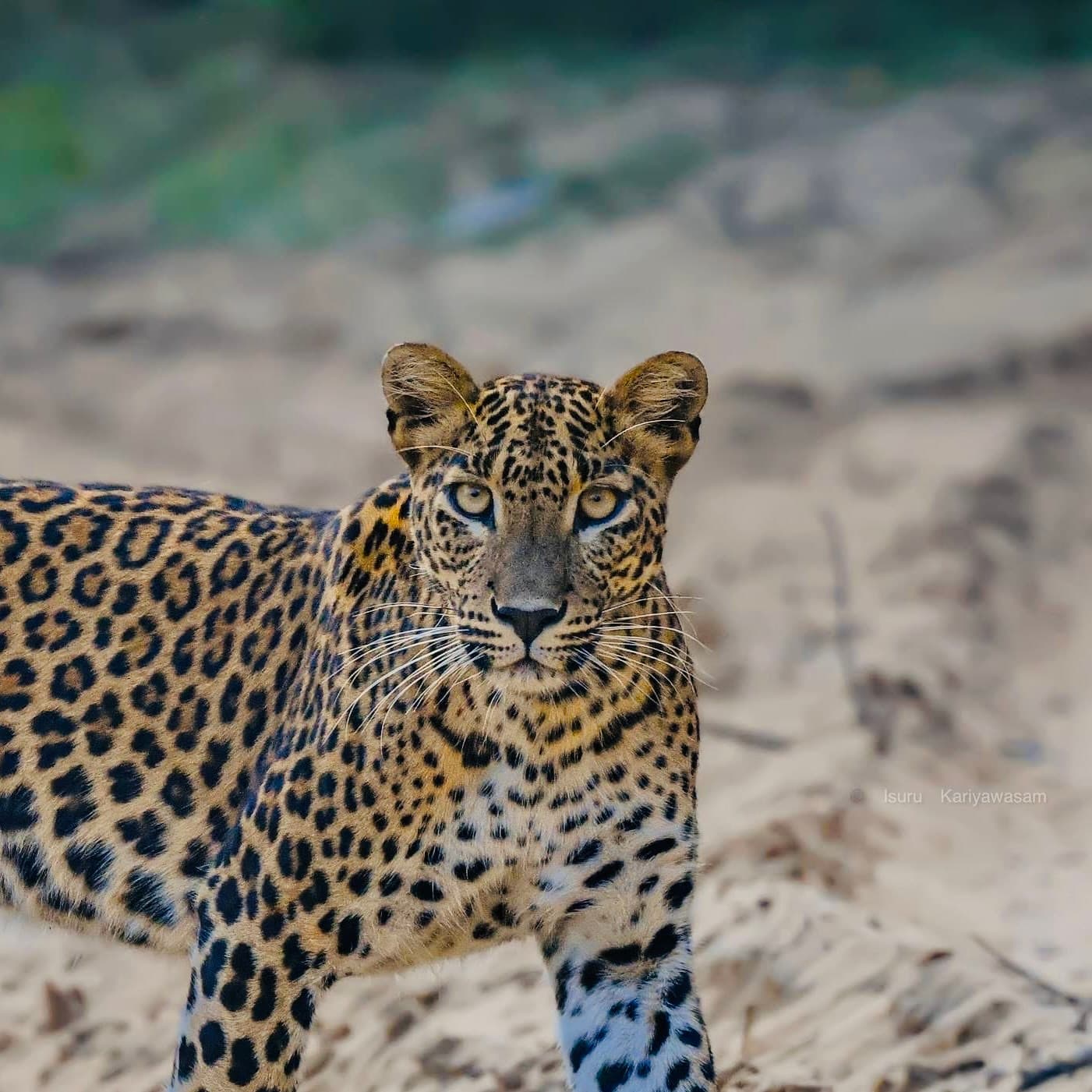
Plan for the leopard. Stay for the country.
The Quick-Reference Pre-Departure Checklist
At least 2 weeks before:
* Apply for ETA at eta.gov.lk (USD 50, official government portal only)
* Book Kandy to Ella train (or Nanu-Oya to Ella segment) on Sri Lanka Railways website
* Book Yala safari and Tissamaharama accommodation
* Visit travel health clinic — vaccinations, malaria prophylaxis, travel medications
1 week before:
* Download offline Google Maps for Sri Lanka (the Yala region specifically)
* Confirm all bookings and download confirmation PDFs
* Purchase travel insurance that covers wildlife activities and medical evacuation
* Photocopy passport — keep one copy separate from your actual passport
Day of departure:
* Passport + ETA confirmation (digital and printed)
* USD cash (approximately USD 200–300 for early expenses before finding an ATM)
* Sunscreen SPF 50+ in checked luggage (liquids rule)
* Any prescription medications for full trip duration
At Bandaranaike International Airport on arrival:
* Proceed to immigration with passport and ETA confirmation
* Collect luggage, proceed to arrivals
* Buy a Dialog or Mobitel tourist SIM at the airport (approximately USD 3–5 for 15GB)
* Withdraw Sri Lankan Rupees at airport ATM (rates are fair; no need to exchange at hotel)
* Book a metered taxi via PickMe app or the official SLTDA taxi counter (avoid unlicensed touts at the arrivals exit)
The Honest Final Word for First-Timers
Sri Lanka in 2026 is simultaneously the best and the most crowded it has ever been. The tourism surge signals a shift towards more authentic, off-the-beaten-path experiences — but it also means more competition for the train seats, the lodge rooms, and the first jeeps through the Yala gate.
The travellers who navigate this successfully are the ones who prepare specifically: who book the train before it sells out, who confirm the Yala jeep price includes the park entry fee, who arrive at the gate at 5:15 AM rather than 6:05 AM, who know the temple dress code before they pack.
This guide is that preparation.
From sun-drenched beaches and tea-covered hills to ancient temples, bustling city life, and thrilling wildlife safaris, Sri Lanka offers a compact yet endlessly rewarding travel experience — if you approach it knowing what you are walking into.
Now you do.
Go.
Last updated: May 2026 | All practical information, entry fees, and travel guidance verified against current 2026 conditions. Always confirm visa requirements, park fees, and transport bookings with official sources before travel, as these change periodically.
Ready to see this in real life?
Book your Yala safari today and experience the magic firsthand.
Explore Packages