
Yala Block 5 The Secret Safari That Beats Block 1 in 2026 (Complete Insider Guide)
Yala Block 5 is the secret the crowds haven't found yet 70% leopard sighting rate, zero jeep jams, ancient forest, river crossings, and the finest elephant encounters in the park. The complete 2026 insider guide to Yala's best-kept wilderness secret.
The Block Nobody Talks About That Every Serious Safari-Goer Secretly Loves
Ask any experienced Yala safari operator which block they personally prefer — not which block they take most clients to, but which one they would choose for themselves on a free morning — and almost every one of them gives the same answer.
Not Block 1. Not the famous Palatupana zone with its granite inselbergs and radio-network leopard alerts and 300 jeeps per peak day.
Block 5.
While Yala National Park's Block 1 is famous for its high density of leopards and resulting crowds, the park offers a quieter, equally rewarding alternative for serious wildlife enthusiasts: Yala Block 5. Leopard sightings are frequent, and because there are fewer jeeps, the quality of the encounter can be superior. Elephants: large herds often roam this area. Sloth Bears: known to frequent the block for foraging.
Block 5 has a rising 70% chance of leopard sightings recently — with dramatically fewer jeeps than Block 1 at peak season. Yet most visitors to Yala never go there. They follow the default circuit, follow the crowd, and never discover that the finest safari in the park is happening 40 kilometres from the main gate.
This is the guide that changes that.
What Is Yala Block 5? Understanding the Park's Geography
Yala National Park is divided into five main blocks plus the adjacent Lunugamvehera National Park (sometimes called Block 6). Most visitors only ever access Block 1 — the iconic southeastern zone accessed via the Palatupana Gate near Tissamaharama. This is where the famous inselbergs are, where the leopard density is highest, and where virtually all safari traffic concentrates.
Block 5 — also known as the Weheragala or Galge block — occupies the northwestern section of the park. It is accessed via the Galge Gate near Buttala, a 45-minute drive from the Katagamuwa entrance and considerably further from Tissamaharama's main tourist infrastructure.
Block 5 (where the animals are more habituated to traffic), combined with Block 6, offers a much more intimate, 'traditional' safari experience. The landscape difference from Block 1 is immediate and striking:
Block 1: Open scrub, granite inselbergs, coastal zone, relatively sparse vegetation, direct Indian Ocean access
Block 5: Tall forest canopy, riverine woodland, seasonal river crossings, ancient trees with significant undergrowth, more dramatic elevation changes
The result is a completely different visual and atmospheric safari — closer to what most people imagine when they picture a classic Asian jungle safari than the open scrub-and-rock landscape of Block 1.
Why Block 5 Is Better Than Block 1 for Many Visitors
The Crowd Reality
In 2026, search interest in Yala has spiked by 45% — and virtually all of that surge is concentrated in Block 1. On peak season weekends, Block 1 receives 300–400 jeeps in a single day. The jeep jam phenomenon — 30–50 vehicles converging on a single leopard sighting through radio-network alerts — is documented, real, and increasingly frustrating for visitors seeking a genuine wilderness encounter.
Block 5 on the same peak-season weekend? Typically 5–15 jeeps total. Sometimes fewer.
The mathematics of this difference are remarkable. The same leopard sighting that involves 40 vehicles in Block 1 involves 3 vehicles in Block 5. The encounter quality — the silence, the extended observation time, the absence of diesel engine noise from competing vehicles — is categorically different.
The Leopard Encounter Quality
Block 5's leopard sighting probability is now estimated at approximately 70% per drive — competitive with Block 1's 60–90% range while delivering encounters of superior quality. The reduction in vehicle competition means that when a Block 5 leopard is found, the guide can choose positioning carefully, cut the engine, and wait as long as the animal chooses to remain visible — without other vehicles arriving and disrupting the encounter.
Sightings are frequent, and because there are fewer jeeps, the quality of the encounter can be superior.
This is the core proposition: Block 5 may have marginally lower statistical probability per drive than Block 1's absolute peak, but the quality of each encounter — in terms of duration, intimacy, and animal behaviour — is consistently higher because vehicle pressure is dramatically lower.
The Elephant Encounters
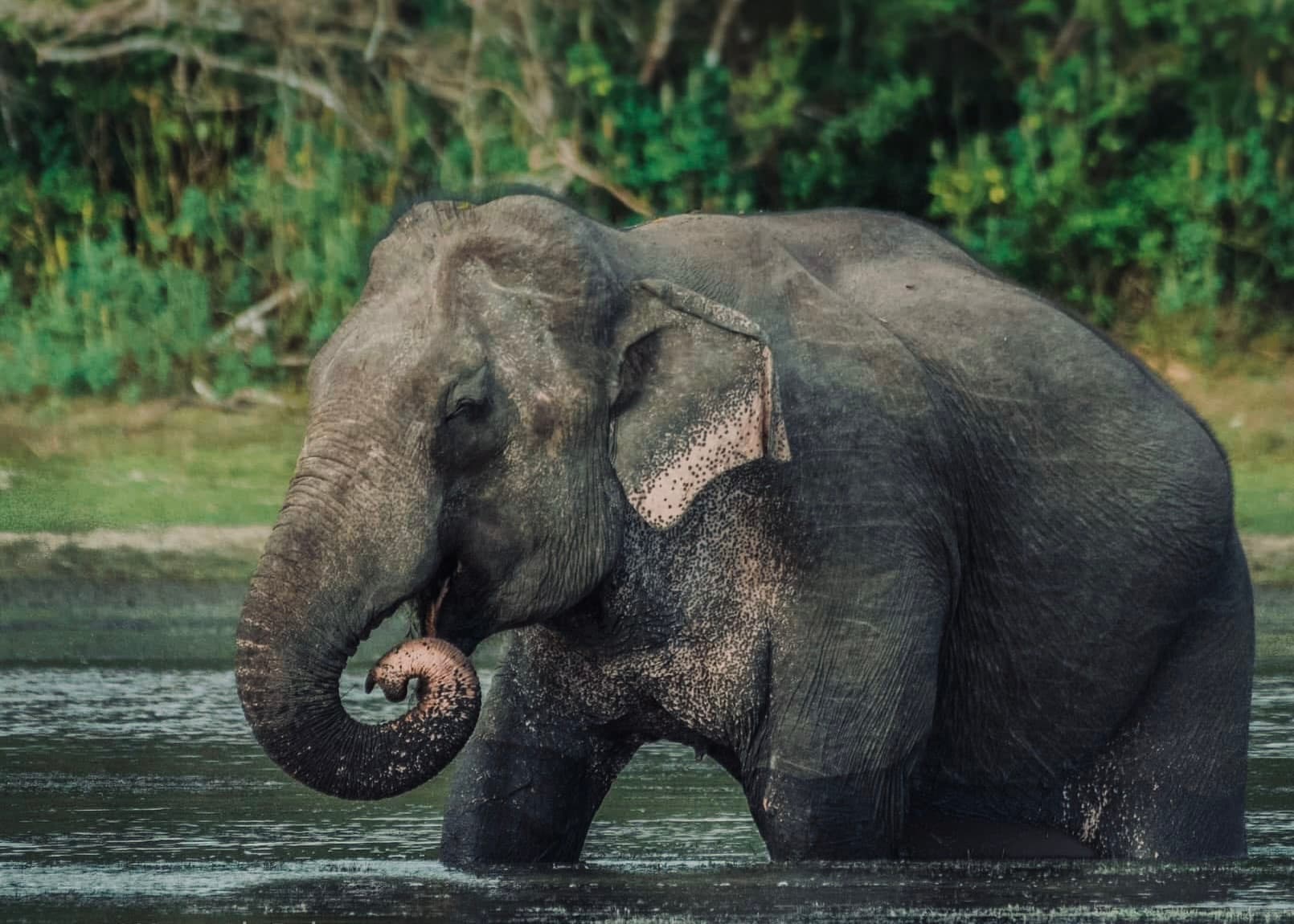
Block 5's forest-edge and riverine habitat produces elephant encounters that Block 1's open scrub cannot replicate. Large herds often roam this area — sometimes including massive tusker bulls that use the forest cover of Block 5 for shade during the day and emerge at the forest margins in the late afternoon.
The river crossings that characterise the Block 5 landscape produce the most cinematic elephant encounters available in Yala — herds entering the water in single file, calves swimming with encouragement from adults, bulls standing sentinel at the crossing point. These crossings, witnessed at dawn or dusk, are one of the finest wildlife spectacles on the island.
The Photography Advantage
Block 5's reduced vehicle traffic means something specific for photographers: background control. In Block 1, a leopard on an inselberg is frequently photographed with multiple other jeeps visible in the frame — an unavoidable background element that degrades the image regardless of technical excellence.
In Block 5, the same leopard sighting with 3 jeeps allows genuine repositioning for clean backgrounds. The tall forest canopy provides depth and colour that the sparse Block 1 scrub cannot. The river surfaces create reflection opportunities absent from Block 1's open terrain.
For wildlife photographers, Block 5 is not a compromise alternative to Block 1 — it is often the superior photographic destination.
Block 5 Wildlife: Complete Species Guide
Leopard
Leopard sightings are frequent in Block 5, with a rising probability documented at approximately 70% per dedicated drive. The block's population includes individuals whose territories extend across the boundary with Block 1 — meaning some of the most-researched, best-known individual leopards in Yala move between both zones.
Block 5 leopards are generally less habituated to vehicles than Block 1 individuals — which means the encounters can feel more natural and wild, though slightly more unpredictable in duration. The leopard that lingers for 18 minutes in Block 1 accustomed to jeeps may move away after 8 minutes in Block 5 where vehicle exposure is lower.
Best areas within Block 5: Forest-edge clearings adjacent to the Weheragala Reservoir, rocky outcrops in the northern section of the block, and the secondary tracks that parallel the main river course.
Elephant
Large herds often roam Block 5 — this is one of the finest elephant zones in the entire Yala ecosystem. The Weheragala Reservoir (technically adjacent to Block 5, accessible from the block boundary) hosts some of the finest dry-season elephant aggregations in the park. Herds of 30–60 animals at the reservoir at dawn, with the water reflecting the orange light and virtually no other jeeps present, is one of the most powerful wildlife experiences available in all of Sri Lanka.
Tusker elephants — the impressive mature males with prominent ivory that represent less than 8% of Sri Lanka's elephant population — are sighted more reliably in Block 5 than Block 1. The block's forest cover and reduced vehicle pressure provides the habitat that dominant bulls specifically seek.
Sloth Bear
Known to frequent the block for foraging — Block 5's forest habitat provides excellent sloth bear territory, with the Palu fruit season (May–August) producing sightings in the forest edge zones where fruiting ironwood trees are accessible.
Experienced Block 5 guides note that sloth bears in this zone are sometimes more relaxed at sightings than Block 1 bears — a consequence of the lower vehicle pressure that affects their habituation. A sloth bear that would retreat quickly in Block 1 when the second and third jeep arrive may continue feeding in Block 5 because no additional vehicles appear.
Birds
Excellent for birdwatching, with numerous endemic and migratory species. Block 5's tall forest canopy produces endemic bird encounters — particularly the Sri Lanka Grey Hornbill, Brown-capped Babbler, and Black-capped Bulbul — that the open scrub of Block 1 rarely provides.
The riverine habitat supports specialist waterbirds: large-billed leaf warblers along the watercourse, lesser fisheagle at river bends, and stork-billed kingfisher at the forest-edge pools. For birders, Block 5 offers a complementary species set to Block 1 — the two zones together provide comprehensive access to Yala's full bird diversity.
Wild Water Buffalo
Block 5's open grasslands and wetland margins host reliable wild water buffalo encounters. The large herds of 20–40 animals grazing in the morning light, with the forest canopy behind them, produce a visual drama that Block 1's more scattered individuals cannot match.
Wild Boar
More commonly encountered in Block 5's forest interior than in Block 1's open terrain. Family groups with striped piglets are regularly sighted at forest margins in the early morning.
How to Access Block 5: The Practical Guide
The Gates
Block 5 is accessed via the Galge Gate near Buttala — a different entrance from the main Palatupana Gate used for Block 1. The Galge Gate is located approximately 45 minutes' drive from the Katagamuwa entrance used for the northern Block 1 approach.
For travellers based in Tissamaharama, the journey to the Galge Gate takes approximately 1 hour — longer than the Palatupana drive, but producing a fundamentally different and often superior safari experience.
Some operators combine Block 1 and Block 5 in a single full-day safari — driving Block 1 circuits in the morning golden hour for maximum leopard probability, then transitioning to Block 5 for the mid-morning and early afternoon period when Block 1 is at its most crowded.
This combination — Block 1 at dawn when probability is highest and crowds are lowest, Block 5 from mid-morning when atmosphere is finest and crowds are essentially absent — represents the optimal full-day Yala structure for visitors who want both maximum sighting probability and maximum experience quality.
The Separate Entry Requirement
Block 5 requires a separate DWC entry ticket from Block 1. If your safari includes both blocks in a single day, your driver will manage two entry tickets — one for each block. Ensure your all-inclusive price quote specifically covers "Block 1 and Block 5 entry" rather than simply "park entry."
Combined Block 1 + Block 5 all-inclusive private jeep (full day): approximately USD 130–180 per person, including both park entry fees and all-day jeep hire. This is higher than a single half-day safari but represents genuinely excellent value for the dual-block experience.
Finding a Guide Who Knows Block 5
This is the critical booking decision. The majority of Yala safari operators work primarily in Block 1 — they know its circuits, its individual leopards, its waterholes. Block 5 requires genuinely different knowledge: different tracks, different animal movement patterns, different alarm call species.
Due to the area's relative remoteness, selecting a knowledgeable guide is crucial for Block 5.
When booking, ask specifically: "Does your driver have regular experience in Block 5? How many Block 5 drives have they done in the past 30 days?" A driver who answers with specific detail — naming recent sightings, describing current elephant locations, referencing specific tracks — has genuine Block 5 knowledge. A driver who says "yes we can go there" without specific detail may be agreeing without the specific expertise that Block 5 requires.
Block 5 vs Block 1: The Direct Comparison
Factor Block 1 Block 5
Leopard probability 60–90% per drive (dry season) ~70% per dedicated drive
Leopard encounter quality Variable — often crowded Superior — fewer vehicles
Jeep numbers (peak season) 200–400 per day 5–15 per day
Elephant encounters Good — scattered herds Excellent — large herds, river crossings
Sloth bear Excellent in season (Palu groves) Good in season (forest foraging)
Landscape Open scrub, granite, coastal Tall forest, rivers, dramatic canopy
Photography background Often other jeeps Clean forest, river reflections
Gate distance from Tissa 25 minutes 60 minutes
Entry fee USD 35–42 per person USD 35–42 per person (separate ticket)
Guide expertise required Standard — most drivers know Block 1 Specialist — request experienced Block 5 guide
Best for Maximum leopard probability Maximum encounter quality, photography, solitude
The verdict: For a visitor's first Yala drive, Block 1 is the correct default — maximum probability in the most accessible zone. For a second drive, an overnight visitor's afternoon session, or any visitor who has experienced Block 1's jeep jam phenomenon and wants something different, Block 5 is unambiguously superior.
The Best Block 5 Itinerary: How to Combine Both Blocks Perfectly
Option A: The Full Day (Best Overall Experience)
6:00 AM: Enter Block 1 through Palatupana Gate (first vehicles in, golden-hour leopard window)
6:00–9:30 AM: Block 1 morning circuit — tracking, waterholes, leopard priority
9:30–10:00 AM: Exit Block 1, drive to Galge Gate (45 minutes)
10:30 AM: Enter Block 5 through Galge Gate
10:30 AM–2:00 PM: Block 5 forest interior, river crossings, elephant herds, sloth bear zones
2:00–4:00 PM: Midday rest at Block 5 rest area or exit and rest in Buttala/Wellawaya
4:00 PM: Optional Block 5 afternoon circuit (golden-hour elephant herds at Weheragala Reservoir)
6:00 PM: Exit Block 5
This structure delivers both the highest-probability Block 1 leopard window AND the finest Block 5 wilderness atmosphere in a single extraordinary day.
Option B: The Dedicated Block 5 Half-Day (Best Value for Repeat Visitors)
6:00 AM: Enter Block 5 through Galge Gate (arrive at gate by 5:45 AM for positioning)
6:00–10:00 AM: Complete Block 5 morning circuit — forest tracks, river zones, elephant herds, sloth bear foraging areas
10:00 AM: Exit gate
This option delivers the complete Block 5 experience at the lowest vehicle density (6–10 AM is Block 5's finest window) and the most cost-effective price point (single entry, half-day jeep).
Option C: The Overnight Combination (Best for Wildlife Enthusiasts)
Day 1 PM: Arrive Tissamaharama, afternoon Block 1 safari (2:30–6:00 PM) Day 2 AM: Block 1 dawn drive (6:00–10:00 AM) Day 2 PM: Drive to Block 5, afternoon safari (4:00–6:00 PM, golden hour at Weheragala) Day 3 AM: Block 5 dawn drive (6:00–10:00 AM)
This structure — two Block 1 drives and two Block 5 drives over two nights — is the most complete Yala experience available, delivering maximum sighting probability AND maximum encounter quality across both blocks.
What Real Visitors Say About Block 5
The reviews that describe Block 5 experiences are consistently among the most enthusiastic in all of Yala safari feedback — precisely because the contrast with the Block 1 jeep-jam experience is so striking.
The best safari possible — amazing tour with a fantastic guide. He took us to all the places before the crowds and we saw a sloth bear, elephants (including a solitary huge male), crocodiles, a lot of birds and mammals and finally a leopard. Couldn't be better than this. Highly recommended.
This review pattern — sloth bear, massive tusker elephant, and a leopard, all in one drive, "before the crowds" — describes a Block 5 experience. The "before the crowds" detail is diagnostic: in Block 5, there essentially are no crowds to be before.
An amazing experience — we chose the all-day safari and we saw a lot of animals: buffalo, elephant, bear, crocodile, lots of birds and even a leopard. I really recommend doing this. And they really respect the animals.
The species variety in this review — buffalo, bear, and leopard alongside the standard species — reflects the Block 5 habitat's ability to produce an unusually diverse single-drive wildlife list.
The Lunugamvehera Connection: Block 6 and Beyond
Adjacent to Block 5, the Lunugamvehera National Park (Block 6) extends Yala's western wilderness zone. Block 6 is by far the least visited block — where sloth bear and leopard are seldom seen. In Block 6, elephants aplenty can be found — particularly in large aggregations at the Lunugamvehera Reservoir.
For visitors specifically seeking the largest elephant concentrations in the extended Yala ecosystem — sometimes 60–100 animals at the reservoir simultaneously — Lunugamvehera via the Thanamalwila Gate is the correct destination. The park sees essentially no tourist traffic compared to Block 1, making it one of the most genuinely wild elephant viewing experiences available in Sri Lanka.
Importantly, there is no direct entry from Block 1 to Block 6 — the two zones require separate access and are typically combined in different itineraries rather than single drives.
The Photographer's Block 5 Guide
Why Block 5 Is the Preferred Photography Block
Wildlife photography is always more powerful when the camera is at the animal's eye level — and always more powerful when backgrounds are clean. Block 5 delivers both advantages over Block 1 in most encounter scenarios.
Clean backgrounds: The tall forest canopy and riverine vegetation of Block 5 provides green, bokeh-rich backgrounds that the sparse Block 1 scrub cannot. A leopard against a blurred forest background reads as a genuinely wild image. The same leopard against three other jeeps and a dust cloud does not.
Light quality in forest: The dappled light of Block 5's forest interior produces a different photographic palette from Block 1's open scrub — more atmospheric, more dramatic shadow-to-highlight ratios, and the specific quality of forest edge light that directional morning sun produces through a canopy.
The river reflection: The seasonal rivers of Block 5 provide reflection opportunities — elephants, egrets, and occasionally leopards at the water's edge reflecting in the still surface — that Block 1's lagoon-only water access cannot consistently replicate at close range.
Positioning freedom: With 3 jeeps rather than 30 at any given sighting, repositioning for the correct light angle and background is actually possible. The most significant single advantage of Block 5 for photographers is not the species or the light — it is the ability to choose where to be without 40 other vehicles blocking every option.
Block 5 Camera Settings Specific Considerations
The forest canopy of Block 5 reduces available light by approximately 1–2 stops compared to Block 1's open scrub — requiring higher ISO settings in the forest interior.
Forest interior (Block 5 specific):
* ISO: 800–3200 (auto with appropriate ceiling)
* Aperture: f/4–5.6 (wider than Block 1 open scrub to compensate for reduced light)
* Shutter: Maintain 1/400s minimum even in shade
River crossing elephant shots:
* Aperture: f/8 (sufficient depth of field for multiple animals and reflections)
* Include foreground river surface and background forest — the depth of these compositions is what makes them exceptional
Booking Block 5: The Practical Steps
Step 1: Find a Guide With Verified Block 5 Experience
The most reliable method: TripAdvisor reviews that specifically mention Block 5 by name, with recent dates. Reviews that describe "Block 5 sloth bear" or "Block 5 river crossing elephant" are written by visitors whose driver genuinely knew the block.
Named guides with consistent Block 5 reviews include operators in the Tissamaharama and Wellawaya area. Ask your shortlisted operators: "Can you name the last three times your driver led a Block 5 safari? What animals were encountered?"
Step 2: Specify Block 5 When Booking
Many operators default to Block 1 unless Block 5 is explicitly requested. State clearly: "I would like the safari to include time in Block 5. Can you plan a route that covers both blocks in a full day?" or "I would like a dedicated Block 5 half-day safari."
Step 3: Confirm the Separate Entry Fee
Block 5 requires its own DWC entry ticket. Confirm: "Is the quoted price all-inclusive for both Block 1 and Block 5 entry?" If combining blocks in a full day.
Step 4: Plan the Route With Your Driver
Before entering any gate, discuss the planned sequence: which block first, which gate, estimated transition time, and specific habitats to target within Block 5. A driver who engages meaningfully with this route planning conversation is a driver who knows the park.
The Honest Assessment: When Block 1 Is Still the Right Choice
Block 5 is not the correct default for every visitor. There are specific circumstances where Block 1 remains the optimal choice:
First-time visitor with one drive only: Block 1's higher absolute probability and shorter gate distance from Tissamaharama makes it the correct single-drive choice for visitors who cannot do multiple drives.
Peak leopard probability is the non-negotiable goal: Block 1's 60–90% range, while Block 5's 70% is competitive, is still the highest absolute probability available at Yala. For visitors who have travelled specifically for the leopard and cannot return, Block 1 remains the rational first choice.
Sloth bear in the Palu tree specifically: The Palu fruiting season sightings at Block 1's known Palu groves are spectacular and reliable. Block 5 sloth bear is good but the specific Palu tree climbing behaviour is more consistently documented in Block 1's known fruiting locations.
The optimal recommendation for most serious Yala visitors: Block 1 on the first morning (maximum probability), Block 5 on the second drive (maximum experience quality). The combination delivers both.
The Block 5 Experience: What It Actually Feels Like
Here is the specific phenomenology of a Block 5 morning that Block 1 visitors never encounter:
6:10 AM. The Galge Gate has just opened. Three jeeps have entered the block — yours and two others, who have immediately taken different tracks. You will not see them again for two hours.
The forest closes around the track almost immediately. Not the open scrub of Palatupana, where sight lines extend for 200 metres in every direction — but tall forest, dark at this hour, with the morning light beginning to filter through the canopy in long golden columns. The air is noticeably cooler than Block 1's open terrain. The sound is different — more layered, more complex, the forest interior's bird calls mixing with the river's presence somewhere to the left.
Your driver cuts the engine at the first river crossing. The water is knee-deep, clear, and moving slowly over gravel. In the mud at the river's edge, a clear set of pugmarks — large, fresh, unwashed by overnight rain.
"Leopard," your driver says. "This morning."
The forest goes very quiet. And you are listening.
That is Block 5. That is what it offers. And in 2026, with Block 1 at peak saturation, it is where the finest Yala safari is being experienced — by the visitors who knew to ask for it.
Frequently Asked: Block 5 Questions
Q: Is Block 5 worth visiting if I've already done Block 1? Yes — unambiguously. Block 5 offers a fundamentally different safari atmosphere, larger elephant herds, quality leopard encounters without the jeep jam, and the riverine forest habitat that Block 1 cannot provide. For repeat Yala visitors, Block 5 is the essential next step.
Q: Can I do Block 5 as a first-time visitor? Yes, particularly as part of a full-day safari that begins in Block 1 for the morning golden-hour and transitions to Block 5 for the mid-morning. This structure delivers both maximum probability and maximum quality in a single day.
Q: How many leopards are in Block 5? Block 5 hosts resident leopards whose territories sometimes overlap with Block 1 individuals. The exact resident count is not separately published from the overall Yala population estimate (300–350 island-wide), but the 70% sighting probability per dedicated drive indicates a healthy resident population.
Q: Does Block 5 have the same entry fee as Block 1? Yes — the government DWC park entry fee for foreign visitors applies equally to both blocks at approximately USD 35–42 per adult.
Q: Is there accommodation near Block 5? Accommodation near the Galge Gate is limited — most visitors access Block 5 as a day drive from Tissamaharama or from accommodation in the Wellawaya/Buttala area. Some specialist operators offer camping in the block's buffer zone — ask specifically if this interests you.
Last updated: May 2026 | Wildlife probability data, safari route information, and Block 5 specific guidance verified against current 2026 operator reports and real visitor accounts from Yala National Park, Sri Lanka.
Ready to see this in real life?
Book your Yala safari today and experience the magic firsthand.
Explore Packages