
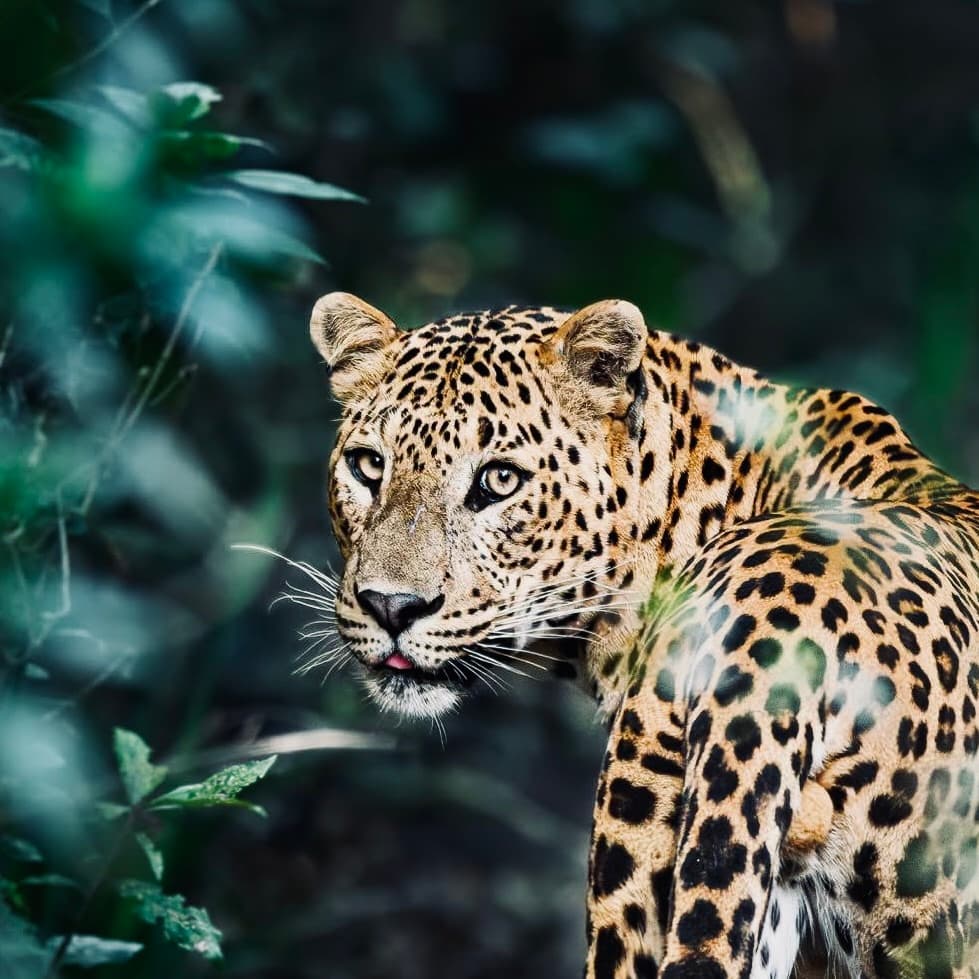
Is Your Yala National Park Safari Hurting the Leopards? The Ethical Visitor's Complete Guide to Responsible Safari in 2026
The truth about Yala National Park's conservation crisis in 2026 the "Lucas" investigation, jeep harassment, and exactly how to visit Yala ethically. The complete responsible safari guide every conscious traveller needs to read before they go.
The Question Nobody Asks Before They Book But Everyone Should
You want to see the leopard. That is why you are going to Yala. The photographs, the documentaries, the blogs — all of them have led you here, to the booking page, to the choice between operators, to the question of which safari gives you the best chance of that encounter.
But here is the question that the booking page does not ask and that almost no traveller thinks to consider before they arrive:
Does your visit help the leopard, or does it harm it?
In the golden grasslands of Yala National Park, where tourists flock daily for a glimpse of elusive leopards, a troubling question now looms: has the pursuit of wildlife tourism begun to endanger the very animals it celebrates?
This is not a theoretical concern. In 2026, it is an active investigation.
The "Lucas" Case: The Story That Changed Everything
Lucas was one of the most well-known individual leopards in Yala National Park — a mature male whose territory covered a significant section of Block 1, whose rosette pattern had been catalogued by researchers, whose movements were known to experienced guides, and who had been observed and photographed by thousands of visitors over several years.
The controversy surrounding "Lucas," a well-known male leopard feared dead after a suspected safari jeep incident, has reignited debate about the cost of Sri Lanka's booming safari industry. Authorities from the Department of Wildlife Conservation have confirmed an ongoing investigation, even suspending a jeep believed to be linked to the case.
If negligence — or worse — is proven, legal consequences will follow under the Fauna and Flora Protection Ordinance. But for many observers, the issue runs deeper than a single incident.
The Lucas case is not the story of one rogue driver. It is the story of what happens when hundreds of vehicles compete daily for access to the same small population of wild animals, when commercial pressure to deliver a sighting overwhelms the ethical commitment to do so without causing harm, and when the infrastructure of accountability has not kept pace with the explosive growth of the tourism industry.
Understanding this story — and understanding your role in it — is the foundation of an ethical Yala visit.
The Scale of the Problem: What the Numbers Actually Mean
Yala National Park, renowned for its leopard population, faces increasing pressure from overtourism and poorly regulated safari practices. In the park's most visited area, Block One, sightings can quickly turn into a melee of jeeps, with drivers jostling for position. This not only harasses wildlife but also results in a diminished experience for visitors.
The numbers tell the story with uncomfortable clarity:
The leopard population: Block 1 is estimated to hold between 25–90 individual leopards depending on the survey methodology. The most conservative peer-reviewed estimate is approximately 25–35 resident adults in the core safari zone.
The vehicle count: During peak season, 200–400 jeeps enter Yala Block 1 on a single day. On some festival weekends, this number has exceeded 500.
The ratio: At peak tourist pressure, there are potentially 10–20 vehicles per individual resident leopard per day. Every leopard in Block 1 is being sought by multiple jeeps simultaneously, every day of peak season, for months.
The consequences of this ratio are not theoretical. They are documented:
* Leopards that previously rested openly on inselbergs have begun retreating to dense scrub earlier in the morning, reducing visible activity by an estimated 30–40% compared to patterns recorded before the tourism boom
* Pregnant females and mothers with cubs have been documented avoiding previously used denning sites after repeated vehicle disturbance
* At least one leopard death — the Lucas investigation — has been attributed to vehicle contact
The future of Yala depends on responsible tourism. This is not aspirational language. It is a statement of fact about an ecosystem under measurable stress.
The Regulatory Response: What Changed in 2024 and What Still Hasn't
The Department of Wildlife Conservation's response to escalating harassment complaints has produced some meaningful reform — and some significant gaps.
What changed in January 2024:
From January 2024, new legislation was introduced requiring all jeep drivers entering Yala to complete a day's training and be licensed by the Department of Wildlife Conservation (DWC) or be accompanied by a certified DWC tracker. This marks an important step towards improving standards and encouraging more respectful wildlife viewing.
The training requirement is real and has produced a measurable baseline improvement in driver knowledge. Drivers who previously had no formal wildlife education now have at minimum a foundation in park regulations, animal behaviour basics, and vehicle-distance requirements.
What still hasn't changed:
Training alone cannot address the more fundamental challenge: the sheer volume of vehicles in the park. A day's training does not eliminate the commercial pressure that causes a driver to follow a radio alert into a 40-jeep crowd. It does not resolve the financial incentive to approach as closely as a tourist requests. It does not reduce the number of vehicles competing for the same sighting.
Long-term solutions must include a cap on daily visitor numbers, improved monitoring of guide behaviour, and the introduction of clearly defined zones to spread the impact of tourism. None of these structural changes have been implemented as of 2026. The DWC has the regulatory authority to implement vehicle caps — similar systems operate successfully in Kenya's Maasai Mara and India's tiger reserves — but political and economic pressure from the safari industry has delayed their introduction.
The gap between what needs to happen and what has happened is where the ethical visitor's choices matter most.
How Your Behaviour Directly Affects the Leopards
This section is the most important in this guide. Not because it will prevent you from going to Yala — it should not — but because it will change how you behave when you are there. And behaviour, multiplied across thousands of visitors, determines outcomes for animals.
The Distance Rule — Why 30 Metres Is Not a Suggestion
The mandatory 30-metre minimum distance between vehicles and wildlife exists because of documented stress responses in leopards at closer ranges. A leopard whose tail begins to flick rapidly, whose ears flatten, or whose gaze shifts from relaxed to alert is experiencing stress from vehicle proximity. This stress response, sustained over repeated encounters, produces the behavioural modification documented in Yala's leopard population.
When you request your driver to move closer — even by 10 metres — you are adding to a cumulative stress load that every vehicle before you has also contributed to. The photograph you get from 20 metres is not meaningfully better than the photograph from 30 metres with a 400mm lens. The cost to the animal is real.
The ethical commitment: Never request your driver to approach more closely than they have voluntarily positioned. If your driver approaches within 15 metres of an animal, ask them to back up regardless of whether other vehicles are closer.
The Flock Behaviour — Why Following Radio Alerts Harms Leopards
The radio-network system at Yala — where drivers alert each other to confirmed sightings, producing convoys of 30–50 vehicles converging on a single animal — is the single most documented source of wildlife harassment in the park.
Chasing animals for better photos, blocking animals' paths, and gathering in large groups at leopard sightings stresses the animals, especially leopards and elephants, and undermines conservation goals.
The leopard that a first visitor is watching calmly at 30 metres changes its behaviour when the 15th, 20th, and 30th vehicles arrive. The calm observation becomes a harassment event. The natural behaviour you came to witness is replaced by stress behaviour triggered by your collective presence.
The ethical commitment: Brief your driver before entering the park: "I prefer quiet, uncrowded encounters over chasing radio alerts. If a sighting has more than 8–10 jeeps, I would rather look elsewhere." This single instruction changes your entire safari dynamic — and reduces pressure on the animal being sighted.
The Speed Problem — Why Fast Driving Kills
The Lucas investigation centres on vehicle speed as the proximate cause of the suspected leopard death. Fast-moving vehicles on Yala's tracks — a behaviour driven by competitive pressure to reach sightings before other jeeps — create an environment where animal-vehicle collisions become possible.
During peak seasons, hundreds of jeeps rush into the park at once. The result is jeep traffic jams, chaotic scenes at wildlife sightings, noisy engines that disturb animals, and fast-driving behaviour between sightings.
The ethical commitment: If your driver is moving at speed between sightings, ask them to slow down. "I'm not in a rush — please drive slowly and let's watch for animals along the track." A driver who slows to track-observation speed is both safer and more likely to spot wildlife that a speeding vehicle would miss.
The Off-Track Temptation — Why It Matters
Yala's tracks are specifically designed to concentrate safari traffic in ways that allow the surrounding habitat to recover. Off-track driving — even briefly, even just a few metres — compresses root systems, destroys understory vegetation, and creates disturbance corridors that fragment the habitat surrounding denning sites.
Never encourage off-road driving for any reason. A photograph taken from an illegal off-track position is a photograph taken at the cost of habitat that belongs to the animals.
How to Choose an Ethical Operator: The Complete Checklist
This is where individual visitor choices translate directly into conservation outcomes. The operators who behave ethically need the business to remain viable. The ones who do not need to lose it.
The Eight Questions to Ask Before Booking
1. "Do your drivers follow the DWC distance regulations regardless of what other operators do?"
An ethical operator answers yes without hesitation and can describe their specific protocol for maintaining distance when other jeeps crowd a sighting.
2. "Do you follow radio alerts to crowded sightings, or does your driver track independently?"
An ethical operator describes a tracking methodology — alarm calls, pugmarks, seasonal patterns — rather than radio-alert dependency. They may join a radio-alerted sighting if it is early enough and uncrowded, but they do not define their approach by it.
3. "What is your maximum vehicle speed inside the park?"
An ethical operator has a specific speed policy — typically a walking pace between sightings (15–20 km/h maximum) and engine-off stationary observation at sightings.
4. "Do you contribute to any Yala conservation programmes?"
Look for operators who actively support the Wilderness and Wildlife Conservation Trust (WWCT) Leopard Project, the Department of Wildlife Conservation's ranger training programmes, or local community conservation initiatives. Financial contribution to conservation — not just verbal commitment — is the meaningful differentiator.
5. "Have any of your drivers had vehicles suspended or licences revoked by the DWC?"
A direct question that reputable operators answer directly. Any operator who deflects this question has something to conceal.
6. "Which gate do you use and why?"
Ethical operators who have done the research access Yala Block 1 through the quieter Katagamuwa Gate rather than the main Palatupana Gate, reducing the vehicle surge pressure at opening time and creating more discreet access. By entering Yala Block 1 through the quieter Katagamuwa Gate, clients benefit from easier, more discreet access to the park — avoiding the congestion often seen at the main entrance, reducing pressure on wildlife and creating a more peaceful experience for both animals and clients.
7. "Do you visit Block 5 and other less-visited zones as a standard practice?"
Ethical operators actively spread visitor pressure across multiple blocks rather than concentrating every client in Block 1. Block 5 (Galge/Weheragala), Block 3, and Block 4 all offer genuine wildlife encounters with dramatically lower vehicle pressure. In addition to Block 1, ethical operators explore the lesser-visited areas of Yala — Blocks 3, 4 and 5 — as well as Lunugamvehera National Park, offering a more exclusive and rewarding alternative to the busier sectors.
8. "Can you show me your DWC licence and your driver's certification?"
A legitimate, licensed operator provides documentation on request without hesitation.
The Green Flags: Signs of an Ethical Operator
* Described in multiple named TripAdvisor reviews as maintaining distance, not chasing animals, and choosing quiet encounters over crowded ones
* Member of the Sri Lanka Ecotourism Foundation or holds a sustainable tourism certification from the Sri Lanka Tourism Development Authority
* Employs drivers from local communities adjacent to the park — operators who support local communities by employing drivers and guides from the surrounding areas contribute to livelihoods and promote conservation awareness
* Has a written ethical wildlife watching policy on their website or in their booking confirmation
* Actively supports a named conservation partner (WWCT, DWC ranger programme, buffer zone reforestation)
* Limits their daily jeep numbers rather than maximising bookings
The Red Flags: Signs of an Unethical Operator
* Uses language like "guaranteed leopard sighting" or "best leopard access" as primary selling points
* Cannot name a specific driver when booking and assigns whoever is available on the day
* Refuses or deflects direct questions about DWC licensing and certification
* Has TripAdvisor reviews specifically mentioning aggressive driving, approaching too closely, or joining large vehicle crowds
* Has no named conservation partners or community support programmes
The Best Ethical Operators and Lodges at Yala in 2026
Kulu Yala — The Conservation-First Luxury Camp
Kulu is widely regarded as the most conservation-committed luxury operator in the Yala ecosystem. The camp works in close collaboration with the Forest Department to help protect and manage the surrounding wilderness, including forest areas adjoining the campsite. Conservation is central to every safari experience — Kulu's guides, drivers and spotters are all highly trained in local flora and fauna, with a deep understanding of the ecosystems they work in.
Kulu specifically uses the Katagamuwa Gate for quieter Block 1 access and actively explores Blocks 3, 4, and 5 in addition to the main Block 1 circuit. For conservation-committed visitors who also want luxury, this is the benchmark property.
Leopard Trails — The Naturalist Standard
The camp's in-house naturalist guides have accumulated years of Yala-specific knowledge and maintain a specific commitment to patient, quiet, distance-respecting observation. For visitors who want the educational depth of a naturalist alongside the ethical commitment, Leopard Trails consistently delivers both.
The Wilderness & Wildlife Conservation Trust Eco-Camp Options
For visitors who specifically want their accommodation choice to directly fund leopard conservation, the WWCT maintains partnerships with several small eco-camp operators near Yala. A stay at a WWCT-partnered property contributes directly to the Leopard Project's long-term photographic monitoring and habitat research programme. Contact the WWCT directly for current partnership accommodation recommendations.
Small Independent Ethical Operators in Tissamaharama
The finest ethical operators at the budget tier are individual drivers who have built their reputation on named TripAdvisor reviews specifically praising their restraint, patience, and tracking skill. Search TripAdvisor for Yala safari reviews, filter to "Most Recent," and look specifically for reviews that mention: maintaining distance, refusing to join large crowds, using Block 5, and naming the driver specifically. These individual operators — whose business depends entirely on ethical reputation — are often the most committed practitioners of responsible wildlife watching at Yala.
The Conservation Organisations Doing the Real Work
Wilderness and Wildlife Conservation Trust (WWCT)
The WWCT Leopard Project is the most comprehensive long-term leopard research and monitoring programme in Sri Lanka, led by researchers Anjali Watson and Andrew Kittle. The WWCT's photographic identification database — covering individual animals across decades — is the scientific foundation of everything meaningful that happens in Yala leopard conservation. Their work directly informs DWC management decisions and produces the population data that justifies the park's existence as a protected area.
Donation link: wwctlanka.org
Supporting the WWCT is the single most effective conservation action available to a Yala visitor. Even a small donation — equivalent to the tip you would give a good guide — contributes to the ongoing research that protects the animals you came to see.
Department of Wildlife Conservation (DWC) Sri Lanka
The DWC is the government body responsible for managing Yala National Park and enforcing its regulations. Reporting specific violations — off-track driving, dangerous speed, animals harassed at close range — to the DWC is the most direct regulatory action available to a visitor. The reporting mechanism exists and functions when used. Every complaint filed creates a paper trail that contributes to driver licence reviews.
DWC hotline: Available at the park entrance and through the official DWC website.
The Sri Lanka Ecotourism Foundation
The Sri Lanka Ecotourism Foundation certifies operators who meet defined standards of sustainable practice — community employment, wildlife distance protocols, plastic-free operations, and conservation contribution. Choosing a certified operator is the simplest single action for visitors who do not have time for the full operator vetting process described above.
The Plastic-Free Commitment: The Environmental Baseline
Yala National Park operates a strict plastic-free zone policy. Single-use plastic bottles are prohibited within the park boundary and can result in fines for operators who allow them. This is not optional and not negotiable.
Bring a reusable water bottle. Refuse any operator who provides single-use plastic water bottles for in-park use. Pack all snacks in reusable containers. Carry a small bag for any litter that accumulates during the drive and remove it when you exit the park.
This baseline is the minimum. The ethical visitor goes further: choosing accommodation that operates plastic-free, refusing single-use plastics throughout the Tissamaharama stay, and specifically asking lodge and guesthouse operators what their waste management practices are.
What Ethical Safari Actually Looks Like: A Day in Practice
This is what responsible Yala visiting looks like on the ground — not as abstract principles but as specific, moment-by-moment choices.
4:30 AM: Your jeep arrives. You have already confirmed with your driver the evening before that you prefer quiet encounters to radio-alert chases. You have agreed that you will not join any sighting with more than 8 other vehicles. You have asked them to use Katagamuwa Gate if available.
5:15 AM: At the gate. You are in the first 10 vehicles through — which means you have the advantage of quiet tracks before the crowd builds. You have this advantage because you chose an ethical operator who prioritises early entry.
6:00 AM: Moving through Block 1. Your driver is listening for alarm calls — the sambar's bark, the langur's warning — rather than watching the radio. They slow the vehicle near a known waterhole and cut the engine. You wait.
6:40 AM: A leopard. A young male on the granite inselberg, 30 metres away. Your driver does not move closer. Three other vehicles arrive within 5 minutes and position at the same distance. The leopard yawns, stretches, and descends from the rock. Nobody rushes. Nobody cuts in front. The animal moves into the scrub on its own schedule and everyone withdraws at the same time.
7:15 AM: The radio crackles. A sighting elsewhere — 25 jeeps already present. Your driver looks at you. You both agree: you do not go.
9:30 AM: Exiting the park. You tip your driver the full ethical guide amount. You make a small donation to the WWCT through their website that evening. You leave a named, specific TripAdvisor review praising your driver's patient, distance-respecting approach — creating the accountability record that sustains ethical operators.
This is not a diminished safari experience. It is a better one. The encounters are longer, calmer, and more behaviourally rich. The animal you watch is behaving naturally. The memory you carry home is of wildlife in its actual state — not of a stressed leopard surrounded by jeeps, but of a wild apex predator going about its morning at its own pace, in the presence of witnesses who understood what they were there to see.
The Honest Conservation Reality: Is Yala's Future Secure?
The honest answer is: not without significant change.
The current trajectory — 200–400 vehicles per day in Block 1, minimal vehicle caps, commercial pressure that consistently outpaces regulatory enforcement — is not sustainable for the leopard population it depends on. The Lucas case is not an isolated incident. It is the first documented fatality of a named individual in an ecosystem that was already showing signs of behavioural stress.
The structural changes required — daily vehicle caps, zone-based visitor distribution, speed enforcement technology, meaningful penalties for regulation violations — are all known and achievable. They are implemented at comparable wildlife destinations worldwide. They are not yet implemented at Yala.
What stands between the current trajectory and a sustainable future is partly political will, partly industry cooperation, and partly visitor pressure. Visitors who choose ethical operators, who report violations, who donate to conservation research, and who share this conversation with other travellers are participants in the political economy of wildlife conservation. Tourism revenue is the primary argument for leopard protection in Sri Lanka. Demonstrating that responsible tourism is both commercially viable and ethically demanded strengthens that argument.
The leopard is not passive in this story. It responds to every vehicle that approaches too closely, every engine that does not cut when it should, every radio-alerted chase through its territory. Its behavioural responses — the retreating, the shortened surface time, the abandoned denning sites — are the feedback signal that the system is under stress.
Your visit matters. It matters because you chose to go — which contributes to the economic case for protection. And it matters how you go — which determines whether that protection comes at an acceptable cost to the animals being protected.
The Ethical Visitor's Commitment: What You Promise Before You Go
Print this or keep it on your phone for the morning of your safari:
I will:
* Maintain silence at all wildlife sightings
* Ask my driver to keep 30+ metres from all animals at all times
* Brief my driver before entering: "I prefer quiet, uncrowded encounters"
* Not join any sighting with more than 8–10 vehicles already present
* Ask my driver to slow to observation pace between sightings
* Never request off-track driving for any reason
* Tip my driver the full ethical amount after a good drive
* Leave a named, specific review that mentions driver behaviour
* Make a donation to the WWCT Leopard Project after my visit
* Report any regulation violations to the DWC
I will not:
* Request my driver to approach more closely than they have voluntarily positioned
* Encourage speed between sightings
* Use any single-use plastic inside the park
* Take or share photographs from any off-track position
* Book a second visit with an operator whose driver violated these principles
Frequently Asked: Ethical Safari Questions
Q: Does visiting Yala at all harm the leopards? Tourism revenue is the primary economic argument for Yala's protected status and the leopard's survival as an apex predator in a landscape surrounded by agricultural pressure. A well-managed, ethical visit contributes more to leopard conservation than it costs. An unethical visit — with harassment, close approaches, and radio-alert chasing — represents a net negative. The question is not whether to visit but how.
Q: How do I report a driver behaving unethically inside the park? Note the vehicle registration number and, if possible, the driver's name. Report to the DWC ranger station at the park entrance or via the official DWC complaint mechanism on their website. The DWC suspended the jeep linked to the Lucas investigation — this demonstrates that the reporting mechanism produces consequences when used.
Q: Is the Katagamuwa Gate better than Palatupana for ethical visiting? By entering Yala Block 1 through the quieter Katagamuwa Gate, visitors benefit from easier, more discreet access to the park — avoiding the congestion often seen at the main entrance, reducing pressure on wildlife and creating a more peaceful experience for both animals and visitors. Ethical operators who have done the research consistently recommend this approach.
Q: Should I feel guilty about going to Yala? No — but you should feel responsible. Guilt is not actionable. Responsibility is. The leopard's survival in the wild depends on tourism revenue that justifies its protection. Your visit, done ethically, is part of the conservation solution. Your visit, done carelessly, is part of the problem. The difference between these two outcomes lies entirely in the choices you make before you arrive and in the jeep.
Q: What happens if I see a driver harassing an animal? Document immediately — photograph the vehicle registration if possible, note the time and GPS location if your phone allows it. If the harassment is serious (chasing a fleeing animal, approaching within 10 metres, off-track driving), ask your own driver to report it to the nearest DWC ranger station, which is accessible from inside the park.
The Letter You Send When You Come Home
After your safari, when the images are downloaded and the memory is vivid, there is one final ethical action available to you: the review.
A specific, named, behaviourally detailed TripAdvisor review — describing what your driver did or did not do, naming them, describing the encounter quality that resulted from their ethical approach — is the most powerful market signal available to individual visitors. It sustains the operators who deserve the business and starves the ones who do not.
Write it. Make it specific. Name the driver. Describe the animal behaviour you observed. Say what your driver did when the jeep count at a sighting reached 15. Say whether they maintained distance without being asked.
This review will be read by the next traveller making the same search you made. It will influence their booking. It will, in a small but measurable way, shape the selection pressure on the Yala safari industry.
You came to see the leopard. The leopard's future depends on visitors who understand what they owe it in return.
You do now.
Last updated: May 2026 | Conservation data, DWC regulation information, and operator guidance sourced from the Wilderness and Wildlife Conservation Trust (WWCT), Department of Wildlife Conservation Sri Lanka, Lanka News Web, Steppes Travel ethical safari guidance, and verified visitor accounts from Yala National Park, Sri Lanka.
Ready to see this in real life?
Book your Yala safari today and experience the magic firsthand.
Explore Packages