
Yala National Park: 50 Most Asked Questions Answered (2026 Complete FAQ Guide)
Every question about Yala National Park answered 50 of the most searched questions about costs, leopard sightings, best time, accommodation, blocks, wildlife, ethical visits and everything in between. Updated May 2026.
Every Question. One Place. Complete Answers.
Yala National Park is one of the most searched wildlife destinations in Asia in 2026 — and the questions people ask about it are remarkably consistent. The same 50 questions appear across TripAdvisor forums, Reddit threads, Facebook groups, and Google's People Also Ask boxes. They are asked by first-time visitors from Germany, repeat visitors from Australia, wildlife photographers from the UK, and families from the Netherlands who have just booked flights and need to know everything.
This guide answers all 50. Completely. Honestly. In plain language that respects your intelligence and your time.
Bookmark this page. Share it with your travel companions. And stop spending three hours reading twelve different blog posts when the answers are right here.
Section 1: The Basics
Q1: What is Yala National Park?
Yala National Park is Sri Lanka's most famous wildlife sanctuary and the country's most visited national park. Located in the southeastern corner of the island in the Hambantota District, it covers approximately 979 square kilometres of diverse habitat — dry monsoon forest, grasslands, coastal lagoons, scrubland, and the Indian Ocean shoreline. It holds the highest documented density of wild leopards anywhere on Earth, alongside 44 mammal species, 215 bird species, and 46 reptile species.
Q2: Where exactly is Yala National Park?
Yala National Park is located in the southeastern corner of Sri Lanka. The nearest town is Tissamaharama, approximately 25 kilometres from the main Palatupana Gate. Colombo is approximately 280 km away (5.5–6 hours by road). Ella is 100 km away (2.5 hours). Mirissa is approximately 90–100 km west (90 minutes). Arugam Bay is approximately 100 km northeast (2 hours).
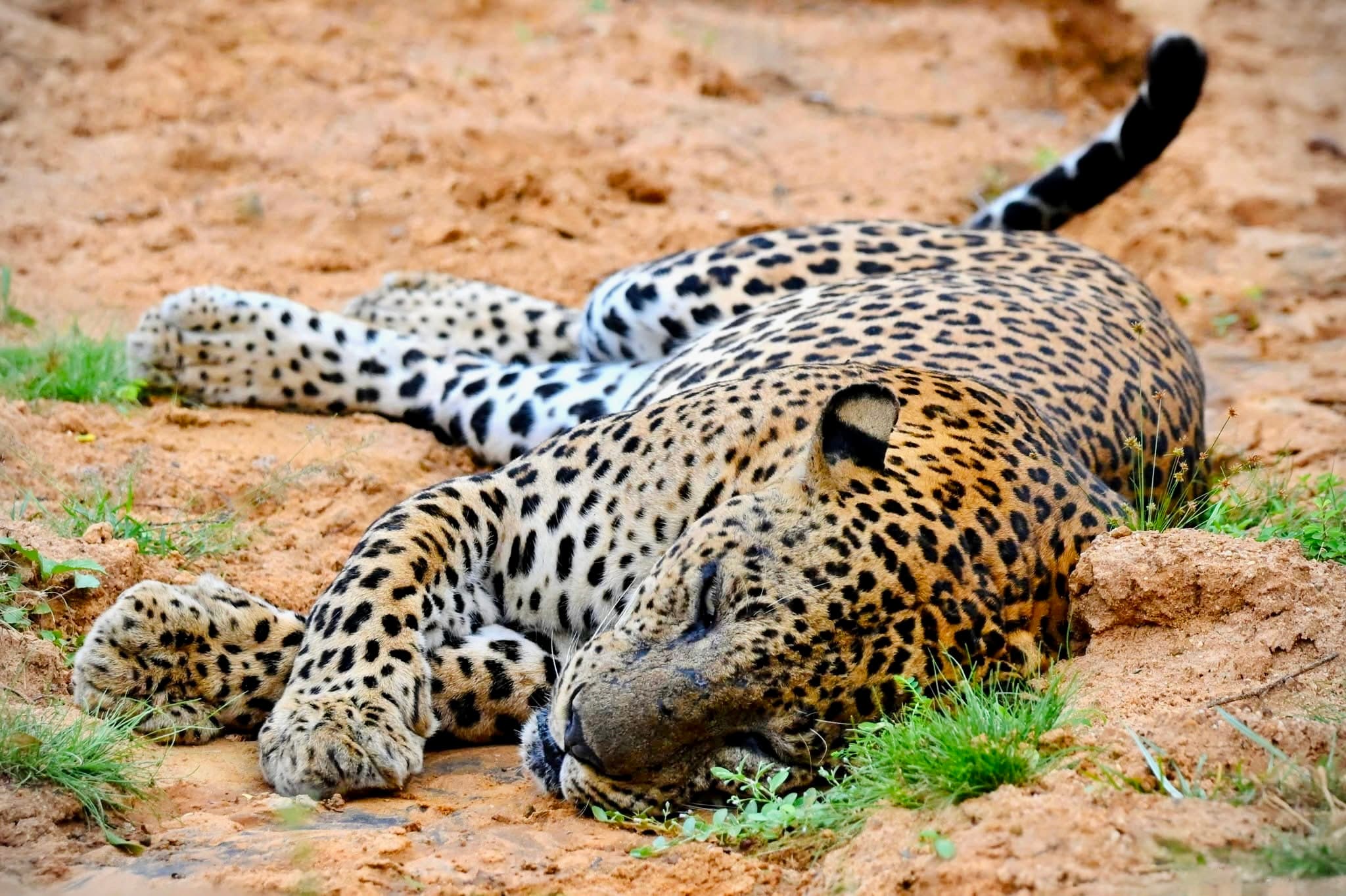
Q3: How big is Yala National Park?
The total area of Yala National Park is approximately 979 square kilometres. However, most safari visitors access only Block 1 (approximately 141 km²) through the Palatupana Gate. Block 5 (Weheragala/Galge) covers an additional significant area accessed via the Galge Gate. The full Yala Complex including the Strict Natural Reserve covers over 1,500 km².
Q4: When was Yala National Park established?
Yala was declared a wildlife sanctuary in 1900 and elevated to national park status in 1938, making it one of the oldest protected areas in Sri Lanka and one of the oldest national parks in Asia.
Q5: What language do Yala safari guides speak?
Most licensed Yala safari drivers speak English to a functional level. Quality of English varies significantly — experienced naturalist guides typically speak excellent English with strong wildlife vocabulary, while basic licensed drivers may have limited conversational English. Request an English-speaking guide when booking and confirm this specifically.
Section 2: Costs and Entry Fees
Q6: How much does Yala National Park entry cost in 2026?
The government park entry fee for foreign adult visitors is approximately USD 35–42 per person per session (2026 rates). This includes conservation levy, service charge, and VAT. Children aged 6–11 pay approximately 50% of the adult rate. Children under 6 enter free. Sri Lankan nationals pay a significantly lower rate.
Q7: What does a Yala safari cost in total?
A complete all-inclusive Yala safari (government entry fee + jeep hire + driver) costs:
* Shared group jeep: USD 50–67 per person (half day)
* Private jeep, 2 people sharing: USD 80–95 per person (half day)
* Private jeep, solo visitor: USD 90–115 per person (half day)
* Full day private safari: USD 130–180 per person (both morning and afternoon sessions)
Always confirm: "Is this the total all-inclusive price including the government park entry fee for all foreign visitors?" before agreeing to any booking.
Q8: Is there a cheaper way to do the Yala safari?
Yes. A shared group jeep costs USD 50–67 per person all-inclusive — the most affordable legitimate option for a foreign visitor. Additionally, visiting in May or June (shoulder season) may allow slightly lower accommodation pricing, though the park entry fee itself is fixed regardless of season.
Q9: Why do foreign visitors pay so much more than locals at Yala?
Sri Lanka operates a formal two-tier pricing system at all major attractions — foreign visitors pay significantly higher entry fees than Sri Lankan nationals. This is official government policy designed to generate tourism revenue while maintaining local access. It applies to Sigiriya, Dambulla, Polonnaruwa, and Yala among others. It is not a scam — it is explicitly stated government pricing.
Q10: Do I pay the entry fee at the gate or to my operator?
The entry fee is paid at the park gate on the day of the safari. Your safari operator/driver handles the payment at the gate on your behalf, using money collected from you as part of the all-inclusive price. There is no online pre-purchase system for standard visitor entry. Any operator who claims you must pay the entry fee online in advance is either misinformed or running a scam.
Section 3: Wildlife
Q11: What is Yala National Park most famous for?
Yala is most famous for having the highest documented density of wild leopards anywhere on Earth — approximately one individual per square kilometre in prime Block 1 habitat. This extraordinary density is why wildlife enthusiasts and photographers specifically travel to Yala for the big-cat encounter that they cannot reliably achieve anywhere else.
Q12: What are the chances of seeing a leopard at Yala?
On a properly timed, well-guided morning drive in Block 1 during the dry season (February–June): 60–90% sighting probability per single drive. Combined probability across two drives (one overnight stay with afternoon + morning safari): 80–90%. Across four drives (two nights): 95%+.
Q13: What other animals can I see at Yala?
The park hosts 44 mammal species. Most commonly encountered: Sri Lankan Elephant (herds of 10–30+ individuals at waterholes), Mugger Crocodile (at coastal lagoons), Spotted Deer (abundant throughout), Wild Boar, Golden Jackal, Mongoose species (several), Grey Langur and Toque Macaque monkeys, Monitor Lizards (Bengal and Water), Wild Water Buffalo, and Peacock. Less commonly: Sloth Bear (May–August Palu season), Fishing Cat. Rarely: Rusty-Spotted Cat, Indian Pangolin, Golden Palm Civet.
Q14: When can I see sloth bears at Yala?
The best time to see sloth bears is during the Palu fruit season from May to August. During this period, sloth bears climb fruiting ironwood (Palu) trees in full daylight and become reliably visible for the first time in the year. Outside this season, sloth bears are primarily nocturnal and sightings require significantly more patience and luck.
Q15: Are there tigers at Yala?
No. Sri Lanka has never had a wild tiger population. The Sri Lankan Leopard evolved as the island's apex predator in the complete absence of tigers and lions — which is precisely why Yala's leopards are so visible, bold, and daylight-active compared to their mainland counterparts.
Q16: Can I see elephants at Yala?
Yes — reliably. Yala's elephant population numbers 300–350 individuals. Herd encounters (10–30 animals at waterholes) are near-certain on any dry-season drive. The best elephant encounters are at waterholes in the early morning and at the Weheragala Reservoir (Block 5 boundary) in the late afternoon.
Q17: What birds can I see at Yala?
Yala is one of 70 Important Bird Areas in Sri Lanka with 215 species documented. Six species are Sri Lanka endemics: Sri Lanka Grey Hornbill, Black-capped Bulbul, Sri Lanka Junglefowl (the national bird), Brown-capped Babbler, Ceylon Swallow, and Yellow-fronted Barbet. The coastal lagoons host extraordinary waterbird concentrations: Painted Stork, Purple Heron, Greater Flamingo, Great White Pelican, Black-necked Stork, and Spoonbill.
Q18: Can I see whales at Yala?
The park's coastal zone occasionally produces Spinner Dolphin sightings from Patanangala Beach inside the park. For dedicated whale watching — blue whales, sperm whales — Mirissa harbour (approximately 90–100 km west along the coast) is Sri Lanka's premier whale watching location, operating November to April.
Section 4: Best Time to Visit
Q19: What is the best time to visit Yala National Park?
The dry season from February to June is the best time for wildlife viewing. Specifically: February–March for peak leopard probability, May–June for excellent leopard probability combined with lowest crowd levels and peak sloth bear (Palu season) activity. November–January is good for migratory birds with slightly lower leopard probability.
Q20: What is the "secret" best month to visit Yala?
May is widely considered the secret best month by experienced Yala operators and repeat visitors. May offers high leopard activity comparable to February–March, the beginning of the Palu season (sloth bear visibility), and dramatically lower jeep numbers than the peak December–March tourist season. It combines excellent wildlife with the lowest crowd levels of any quality month.
Q21: Is Yala open in September?
No. Block 1 typically closes in September for its annual conservation rest period, usually reopening in mid-October. The exact dates vary year to year — always verify the current closure period at the official Department of Wildlife Conservation website (dwc.gov.lk) before booking any trip that includes Yala in September or October.
Q22: Can I visit Yala during the rainy season?
Yala can be visited during the green season (October–January for the northeast monsoon) but wildlife sightings are harder — thicker vegetation and dispersed water sources mean animals scatter across the park rather than concentrating at waterholes. The experience is more atmospheric but statistically less productive for major species. Migratory birds arrive in extraordinary numbers November–February, making this the best birding season.
Q23: Does Yala close on weekends?
No. Yala is open daily except during the annual September–October conservation closure. However, Sri Lankan weekend and public holiday visitor volumes are significantly higher than weekdays — domestic tourists concentrate on weekends. If crowd avoidance is a priority, visit on a Tuesday, Wednesday, or Thursday.
Q24: Is Yala open on Poya Days (full moon public holidays)?
Yala operates on Poya Days. However, domestic tourist numbers are elevated on Poya Days as Sri Lankans observe a national holiday. The impact on foreign visitor experience is moderate — more vehicles from domestic visitors but the general park operations continue normally.
Section 5: Planning Your Visit
Q25: How do I get to Yala National Park?
* From Colombo: Private vehicle via Southern Expressway + coastal highway, approximately 5.5–6 hours
* From Ella: Private vehicle via Wellawaya, approximately 2.5 hours
* From Mirissa: Coastal highway east, approximately 90 minutes
* From Galle: Coastal highway east, approximately 2–2.5 hours
* From Arugam Bay: Coastal road west through Pottuvil and Panama, approximately 2 hours
Public buses connect Colombo and Tissamaharama but journey time is 6+ hours with transfers. A private vehicle is strongly recommended for the specific timing requirements of the safari (4:30 AM pickup, 5:15 AM gate arrival).
Q26: How many days should I spend at Yala?
One night (two safari drives) is the minimum recommendation for most visitors — delivering 80–90% combined leopard probability and both golden-hour windows. Two nights (four drives) is optimal for serious wildlife enthusiasts, photographers, and honeymooners — delivering 95%+ combined probability and the finest quality encounters. A day trip (one drive) is possible from Mirissa or Tangalle but involves significant transit for a single wildlife window.
Q27: What time does the Yala gate open?
The Palatupana Gate (main Block 1 entrance) opens at 6:00 AM daily. The morning safari session runs from 6:00 AM to approximately 10:00 AM, when all vehicles must exit for the mandatory midday rest. The afternoon session begins approximately 2:00–2:30 PM. The evening exit is at 6:00 PM.
Q28: What time should I arrive at the gate?
5:15 AM — not 6:00 AM, not 6:05 AM. The first 10–15 vehicles through the gate at 6:00 AM have 45 minutes of quiet, undisturbed park before the main crowd builds. This requires a 4:30 AM pickup from Tissamaharama accommodation. This timing decision is the single highest-value planning choice available at Yala.
Q29: Do I need to book in advance?
Yes for accommodation in Tissamaharama (particularly peak season) and strongly recommended for the safari operator. During December–April peak season, reputable operators' morning safari slots fill within 24–48 hours. Book your operator before arriving in Tissamaharama, not on arrival.
Q30: Do I need to bring my passport to Yala?
Yes, absolutely. A valid passport is mandatory for all foreign visitors at the Palatupana Gate ticket window. Phone photographs, driving licences, and photocopies are not accepted. Put your passport in your daypack the night before your safari — not in the hotel safe, not in your main luggage.
Section 6: The Safari Experience
Q31: What is the difference between Block 1 and Block 5?
Block 1 (accessed via Palatupana or Katagamuwa Gate) is the most visited zone — highest leopard density, most jeep traffic (200–400 per day in peak season), open scrub and granite inselberg landscape, coastal lagoons, 60–90% leopard probability per drive.
Block 5 (accessed via Galge Gate) is the quieter alternative — tall forest canopy, riverine habitat, river crossings, 5–15 jeeps per day in peak season, 70% leopard probability per dedicated drive, largest elephant herds in the park. Superior experience quality per encounter; slightly lower statistical probability than Block 1 at its absolute peak.
The optimal structure: Block 1 at dawn (maximum probability, quietest hour) combined with Block 5 from mid-morning (finest atmosphere, fewest vehicles).
Q32: What is a "jeep jam" at Yala and how do I avoid it?
A jeep jam occurs when a leopard sighting is broadcast via radio network and 20–50+ vehicles converge simultaneously on a single animal. The result is noisy, crowded, and stressful for both the animal and the observer. To avoid: arrive at the gate early (first vehicles in have the best independent tracking time before radio alerts multiply), brief your driver to prefer independent tracking over radio-alert following, request Block 5 as part of your route, and visit in May or June when total jeep numbers are lower.
Q33: What should I wear on the Yala safari?
Neutral colours: khaki, olive, beige, stone. Bright colours (especially white) are visible to wildlife at distance and can reduce encounter duration. Long sleeves for sun protection and insect management. A light fleece for the pre-dawn cold (genuinely cold at 4:30 AM in the dry season despite the destination). Wide-brimmed hat. Closed-toe shoes.
Q34: What should I bring on a Yala safari?
Essential: Passport, camera (charged), reusable water bottle (single-use plastic banned), SPF 50+ sunscreen (applied 30 minutes before pickup), wide-brimmed hat, light fleece for pre-dawn, binoculars (10×42 recommended), snacks for the midday rest area, cash for tips.
Q35: Can I use my phone camera at Yala?
Yes. Modern flagship smartphones (iPhone 16 Pro, Samsung S25 Ultra) produce good photographs of wildlife at moderate distances in good morning light. The main limitations are long-range distance photography (computational zoom above 5–7x produces artefacts) and pre-dawn low-light performance. For the full safari photographic experience, a dedicated camera with 200–400mm minimum reach is recommended.
Q36: Can I leave the jeep during the safari?
Only at designated areas: the park's midday rest area, Sithulpawwa Rock Temple (a short climb from the jeep track), and the beach area at Patanangala. Walking in the jungle outside these designated areas is not permitted during standard safari drives.
Q37: Is there a toilet inside Yala National Park?
Yes — at the mandatory midday rest area where all vehicles must stop between approximately 10:00 AM and 2:00 PM. Basic facilities are available there. There are no other toilets inside the park during the drive. Plan accordingly.
Q38: Can I eat during the safari?
Yes — at the midday rest area. The facility sells basic food and drinks at elevated prices. It is strongly recommended to bring your own food and water (in reusable containers). During the drive itself, eating in the jeep is possible but should be done quietly and without strong-smelling food that might affect wildlife encounters.
Section 7: Accommodation
Q39: Where should I stay for a Yala safari?
Three main options:
Tissamaharama town (25 minutes from gate): Budget to mid-range guesthouses at USD 25–80 per night. Best value. Active hosts who coordinate safari bookings. Recommended for budget travellers and those prioritising safari quality over accommodation luxury.
Buffer zone lodges (5–15 minutes from gate): Cinnamon Wild Yala, Hilton Yala, and similar properties. Pool, restaurant, in-grounds wildlife (elephants at dusk at some properties). USD 80–280 per night.
Luxury buffer zone: Wild Coast Tented Lodge, Chena Huts, Leopard Trails, Kulu Yala. All-inclusive private safaris, extraordinary architecture and settings. USD 300–1,200+ per night all-inclusive.
Q40: What is the best luxury lodge near Yala?
For romance and architecture: Wild Coast Tented Lodge (leopard-spot cocoon tents, Indian Ocean views, all-inclusive). For privacy and beach: Chena Huts (individual plunge pools, turtle beach, maximum 28 guests). For naturalist quality: Leopard Trails (finest in-house guide team, twice-daily drives, communal dining). For conservation commitment: Kulu Yala (works with Forest Department, multi-block access, documentary crew-level expeditions).
Q41: Is there accommodation inside Yala National Park itself?
Yes — the Department of Wildlife Conservation (DWC) operates basic government bungalows inside the park (Heenwewa, Mahaseelawa). These allow inside-park positioning with pre-gate access — the finest budget wildlife access at Yala. They are not luxury properties. Book through the official DWC website months in advance for peak season dates.
Section 8: Safety and Ethics
Q42: Is Yala National Park safe?
Yes, for all standard safari visitors. The park is accessed exclusively by licensed safari jeep — there is no walking in the wildlife areas during standard drives. All Yala wildlife is wild and should be respected at distance (30 metres minimum), but within the jeep context, all species including the leopard, elephant, and crocodile are encountered safely.
Q43: Are there dangerous animals at Yala I should know about?
All Yala wildlife is wild and should be treated with respect. Key points: Never leave the jeep near water (crocodile territory), never pressure your driver to approach within 15 metres of elephants (charge risk), and never encourage approach within 30 metres of any large mammal. Venomous snakes (cobra, Russell's viper) are present but extremely unlikely to be encountered dangerously. The jeep provides complete protection for all standard encounters.
Q44: Is plastic allowed inside Yala National Park?
No. Yala operates a strict plastic-free zone policy. Single-use plastic water bottles and other single-use plastics are prohibited inside the park and can result in fines for operators who allow them. Bring a reusable water bottle filled at your accommodation.
Q45: How do I report unethical driver behaviour at Yala?
Note the vehicle registration number and, if possible, the driver's name. Report to the DWC ranger station inside the park (accessible during the midday rest period) or via the official DWC complaint mechanism at dwc.gov.lk. Reportable violations include: off-track driving, approaching within 10 metres of wildlife, speeding between sightings, and driver misconduct.
Section 9: Practical Questions
Q46: What is the best camera lens for Yala?
For a mirrorless or DSLR camera: a 100–500mm or 150–600mm zoom lens. Yala's most common leopard sightings occur at 20–60 metres — a 400mm lens on a full-frame camera produces well-framed portraits at 30 metres. A beanbag (resting on the jeep door frame) is essential for stabilisation in place of a tripod.
Q47: Do I need a visa to visit Sri Lanka and Yala?
Most nationalities require an Electronic Travel Authorisation (ETA) for Sri Lanka. Apply at eta.gov.lk (the official government portal only) — USD 50, processed in 24–48 hours. Apply at least 5 days before departure. Never use a third-party website for this application.
Q48: Can I visit Yala from Ella on a day trip?
Yes, but it is not recommended. The drive from Ella to the Palatupana Gate takes 2.5 hours — meaning you cannot reach the gate before 6:30–7:00 AM at the earliest from a 4:00 AM departure, missing the finest wildlife window. Day-trip visitors consistently report arriving 30–60 minutes after the gate's most productive period begins. An overnight in Tissamaharama is strongly recommended over a day trip from Ella.
Q49: What is the nearest airport to Yala National Park?
Bandaranaike International Airport (CMB) in Colombo is the main international gateway — approximately 5.5–6 hours from Yala by road. Mattala Rajapaksa International Airport (HRI) near Hambantota is approximately 60 km from Yala — significantly closer but with very limited scheduled flights. Check current schedules before considering this option.
Q50: What is one thing people always wish they had done differently at Yala?
The single most consistently reported regret from first-time Yala visitors is not staying overnight. Travellers who did a day trip from Ella or Mirissa consistently say they wish they had stayed one night in Tissamaharama to access both the afternoon golden-hour drive AND the 5:15 AM gate arrival for the morning drive. The overnight stay is the planning decision that separates a good Yala experience from an extraordinary one.
Quick Reference: The Most Important Numbers
Fact Detail
Park entry fee (foreign adult, 2026) ~USD 35–42 per person per session
Gate opening time 6:00 AM
Recommended gate arrival time 5:15 AM
Jeep pickup time needed 4:30 AM
Midday closure ~10:00 AM – 2:00 PM
Annual closure September – mid October (verify annually)
Leopard density Block 1 ~1 per km²
Leopard probability (1 drive, dry season) 60–90%
Leopard probability (2 drives combined) 80–90%
Mammal species 44
Bird species 215
Reptile species 46
Best months (leopard + low crowds) May and June
Best months (peak leopard probability) February and March
Sloth bear season May–August (Palu fruit)
Distance from Ella ~100 km, 2.5 hours
Distance from Colombo ~280 km, 5.5–6 hours
Nearest major town Tissamaharama (25 min from gate)
Still Have a Question?
If your specific question is not answered above, the best sources for real-time, current information about Yala National Park are:
For park regulations and closure dates: dwc.gov.lk (Department of Wildlife Conservation official website)
For operator and guide quality: TripAdvisor's Yala National Park section — filter reviews by "Most Recent" and look for named guides with specific wildlife descriptions
For conservation news: wwctlanka.org (Wilderness and Wildlife Conservation Trust — the leading leopard research organisation in Sri Lanka)
For weather and seasonal planning: Sri Lanka Meteorological Department website (meteo.gov.lk)
The park is extraordinary. The leopard is there. Go prepared — and go soon.
Last updated: May 2026 | All information verified against current 2026 conditions, DWC regulations, and real visitor accounts from Yala National Park, Sri Lanka. Entry fees, closure dates, and regulations change periodically — always verify with official sources before travel.
Ready to see this in real life?
Book your Yala safari today and experience the magic firsthand.
Explore Packages