
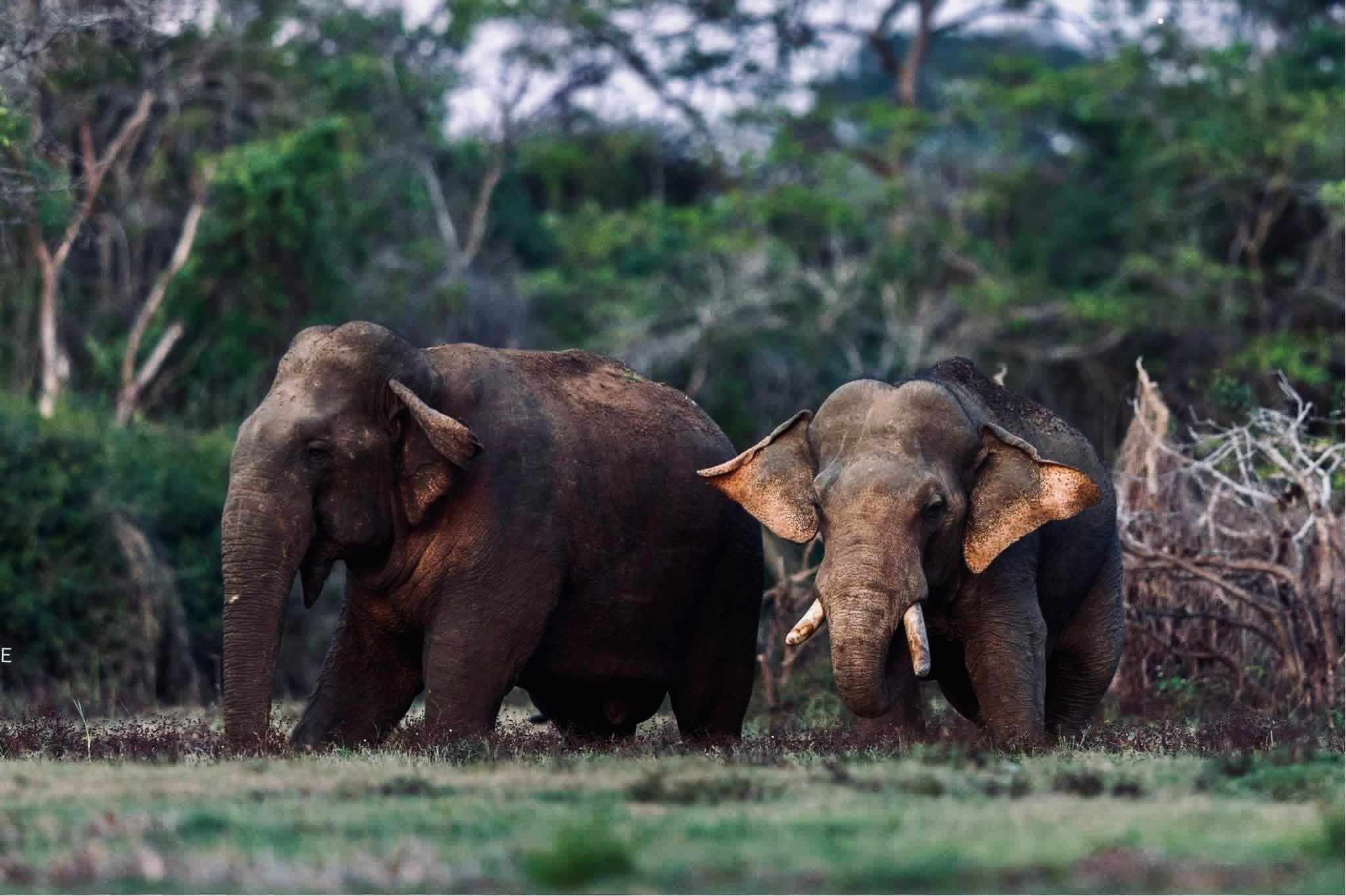
Yala National Park Insider Guide 2026 The Secrets Only Experienced Safari-Goers Know
The Yala National Park insider guide for 2026 the specific secrets, hidden tactics, real costs, and honest truths that only experienced safari visitors know. Read this before you book anything.
What the Tourist Guides Don't Tell You About Yala National Park
It is the only place in Asia where you can see a leopard, a sloth bear, and an elephant on the beach in one morning. Every travel blog says this. Every tour operator repeats it. And it is completely true.
What they don't tell you is everything else.
The specific gate timing advantage that doubles your sighting quality. The radio network trick that separates amateur from expert guides. The seasonal window that combines peak leopard activity with lowest jeep volumes. The block that experienced photographers specifically request while first-timers queue at the main entrance. The moment in the drive — always unexpected, always different — where the park stops being a destination and starts being an experience.
In 2026, search interest in Yala has spiked by 45%, driven by its global reputation for high-density leopard sightings. Hundreds of thousands of people are planning their visit right now. Most of them are reading the same generic guides. Almost none of them are reading this.
This is the insider version. The specific, granular, earned knowledge that changes everything about how you experience Yala National Park.
Insider Secret #1: The Gate Timing Is the Single Most Important Decision You Make
If your driver isn't at the gate by 5:15 AM, you are already behind the curve.
The Palatupana Gate opens at exactly 6:00 AM. Here is what nobody fully explains about why those 45 minutes of queue positioning matter so dramatically:
When the gate opens, every vehicle that enters simultaneously fans out across Block 1's network of tracks. The first 10–15 vehicles distribute themselves across different circuits. They have no competition for alarm call response. When the sambar deer barks once at 6:12 AM from the eastern tree line, the first-positioned driver hears it clearly and responds immediately. The 47th vehicle through the gate, arriving at 6:05 AM, is behind 46 competitors who have already positioned between them and every productive circuit.
The first 90 minutes after gate opening belong to early arrivals. Leopards are most active during the "Golden Hours" — the first 90 minutes after sunrise and the last hour before sunset. These are also the hours of lowest vehicle competition, best light, and lowest temperature. Being in the park for these hours — rather than arriving as they end — is the difference between a good safari and an extraordinary one.
The insider action: Tell your driver at booking: "I need to be at the Palatupana Gate by 5:15 AM, not 6:00 AM." This requires a 4:30 AM pickup from Tissamaharama. Most drivers can accommodate this. The ones who cannot are giving you a signal about their commitment to your experience.
Insider Secret #2: The Radio Network Is Both Your Greatest Asset and Your Biggest Problem
Here is how the Yala sighting system actually works, which most guides never explain:
When a leopard is confirmed, the driver radios other jeep drivers. Within 4–8 minutes, every driver who heard the alert is converging on the location. Within 12 minutes of a confirmed sighting in Block 1, you can have 30–50 vehicles around a single animal.
The biggest complaint about Yala is the "Jeep Jam" — when a leopard is spotted, drivers converge and the experience degrades for everyone — including the animal.
But here is the insider flip: the radio network also works in reverse. A skilled, ethically-minded driver who is independently tracking — reading alarm calls, following pugmarks, positioning based on territorial knowledge — will often receive the first radio alert rather than respond to it. They find the leopard first because they were looking intelligently rather than driving the default circuit.
The insider action: Before entering the gate, have this specific conversation with your driver: "I prefer independent tracking over radio alert following. When radio alerts come in, please tell me how many jeeps are already there before we decide to join. If there are already 15 or more, let's look elsewhere."
A driver who agrees with this approach is a quality driver. A driver who looks confused or resistant prefers the radio network because it requires less skill.
Insider Secret #3: May and June Are the Actual Best Months — Not February
Every travel guide says February and March are the best months. The best time to visit Yala National Park is from February to June during the dry season — with less water in the ponds, it's easier to spot animals coming out to drink — the peak season for leopards runs through February and March.
This is accurate. And it is also the most crowded period. In peak leopard season (February and March), you should keep in mind that you will not be the only jeep around.
The insider knowledge: May and June deliver leopard probability essentially equivalent to February and March — the dry season is fully established, waterholes are concentrated, and animal movement is predictable. But May and June have a fraction of February's vehicle volume. In May, you share a Block 1 morning drive with perhaps 20–40 jeeps total rather than 300–400.
The bonus: May is the beginning of the Palu fruit season, when sloth bears climb ironwood trees in full daylight and become reliably visible for the only time of year. May and June therefore offer: peak leopard conditions + peak sloth bear conditions + dramatically lower crowds. This combination is not available in February.
The insider action: If your dates are flexible, choose May or June. Tell your social network they are wrong about February being the best month. They will be sceptical until they try it.
Insider Secret #4: The Block 5 / Block 1 Combination Is the Optimal Full-Day Structure
Most visitors to Yala spend their entire safari in Block 1. This is because most drivers default to Block 1 — they know it better, the booking infrastructure is centred around it, and the leopard density is highest there.
Block 5 (Weheragala) is a rising favourite for 2026 — while leopards are shyer here, you'll share the sighting with 5 jeeps instead of 50. Block 3 and 4 require more patience but offer a rugged, authentic "lost world" feel.
The insider structure: Block 1 from 6:00–9:00 AM (maximum probability during the golden hour, lowest competition of the day, best tracking conditions), then transition to Block 5 from 10:30 AM to 2:00 PM (completely different landscape, tall forest canopy, river crossings, almost no other jeeps). Return to Block 1 for the 3:00–6:00 PM golden-hour afternoon drive if you have a full-day permit.
This structure delivers: two golden-hour leopard windows in Block 1 + the finest wildlife atmosphere available at Yala in Block 5 + elephant encounters of exceptional quality (Block 5 hosts larger herds) + the complete visual variety of both the open-scrub coastal zone AND the forested riverine zone.
The insider action: When booking a full-day safari, specifically request: "Can we do Block 1 from 6:00 AM, transition to Block 5 mid-morning, then return to Block 1 for the afternoon golden hour?" A driver who knows Block 5 well will respond with enthusiasm. One who has never driven Block 5 will deflect.
Insider Secret #5: The Katagamuwa Gate Is Better Than Palatupana for Smart Visitors
The main Palatupana Gate receives the majority of all Yala safari traffic. It is closest to Tissamaharama, most convenient for accommodation, and most commonly used by operators.
The Katagamuwa Gate on Block 1's eastern boundary receives a fraction of the traffic. It accesses a different set of circuits — including some of the park's finest coastal zone territory and the tracks that connect Block 1 to the Kataragama region.
For visitors coming from Arugam Bay or eastern Sri Lanka, Katagamuwa is the natural and superior entry point. For visitors specifically interested in the park's coastal leopard zone (where leopards are occasionally photographed walking on the beach at Patanangala), Katagamuwa access puts you in position faster.
By entering Yala Block 1 through the quieter Katagamuwa Gate, visitors benefit from easier, more discreet access — avoiding the congestion often seen at the main entrance, reducing pressure on wildlife and creating a more peaceful experience for both animals and visitors.
The insider action: Ask your operator: "Have you used the Katagamuwa Gate? Can we access the eastern circuits of Block 1 from that entrance?" The operator who knows this gate and its advantages is an operator with genuine park-wide expertise.
Insider Secret #6: Individual Leopard Identification Is the Quality Test for Any Guide
Block 1's leopard population is one of the most intensively studied wild big cat populations on Earth. Researchers at the Wilderness and Wildlife Conservation Trust have photographically catalogued over 150 individual animals. Each one has a name, a known territory, a documented history, and in some cases a family lineage spanning multiple generations.
A guide who can look at the leopard you are currently watching and say "that's the female whose territory covers the southern inselbergs — she had two cubs six months ago" is not showing off. They are demonstrating the accumulated observational knowledge that separates a genuinely skilled naturalist from a driver who follows radio alerts.
With no lions or tigers to fear, Sri Lankan leopards are unusually bold — they are frequently spotted walking on the main tracks or resting on rocky outcrops. A guide who knows which individual is walking which track today is working at a level of park-specific intelligence that fundamentally changes the quality of your safari.
The insider question to ask before booking: "Can your guide identify individual leopards by their rosette pattern?" A guide who answers yes and can name specific individuals in Block 1 is working at a genuinely high level. A guide who says "yes we see many leopards" has not understood the question.
Insider Secret #7: The Park Sounds Different at Every Hour — And Each Hour Tells a Different Story
6:00 AM sounds like birds warming up. 6:30 AM sounds like birds at full volume and the first thermal insects beginning. 7:00 AM sounds like the park at full daytime capacity. 8:30 AM starts to go slightly quiet as the heat builds. 9:30 AM produces the specific midday acoustic signature of a park in full sun — predominantly insects, fewer birds, occasional elephant rumble in the distance.
Each acoustic layer tells you something specific about animal activity. The sambar deer's alarm bark at 6:15 AM means a predator is nearby. The peacock's specific urgent scream (different from the territorial call) at 7:30 AM means something large is moving in the ground vegetation nearby. The grey langur's cascading warning call from the canopy means something is on the forest floor below.
Yala is one of the richest wildlife destinations in Asia, offering an incredible variety of animals across its forests, grasslands, and lagoons — every safari brings a new experience, with different species appearing depending on the time of day and season.
The time-of-day dimension of this variety is something almost no guide explains to visitors. Each hour of the drive is ecologically distinct. Understanding what each hour means allows you to calibrate your attention correctly rather than maintaining the same level of vigilance from 6:00 AM to 10:00 AM.
The insider practice: At the start of the drive, ask your guide: "What should we expect from each hour of the morning? What does the soundscape tell us?" A guide who can answer this with specificity is tracking the park's daily rhythm at an expert level.
Insider Secret #8: The "Secret Month" for Photographers Is Not When You Think
Wildlife photographers who know Yala specifically choose October — the brief window immediately after the park reopens from its September conservation closure — as their preferred shooting month.
Here is the logic: the park has been closed for 4–6 weeks. Animals have had this time entirely without vehicle pressure. Their behaviour has partially de-habituated from the jeep presence. The animals encountered in the first two weeks after reopening are marginally more natural in their movement — less aware of the specific jeep-stopping-and-pointing routine, more likely to move across open ground without the hesitation that accumulated vehicle exposure produces in the later dry season.
Additionally, October's jeep counts are the lowest of any month in the entire year. The post-closure period is completely unknown to most tourists, who have been told to avoid September–October. October visitors essentially have the park to themselves — 10–20 jeeps maximum on any given day.
The trade-off: the green season means thicker vegetation and reduced sight lines. The dry-season waterhole concentration that makes peak-season sightings so reliable does not yet exist in October. Sighting probability per drive is lower than February–May. But the quality of any encounter — extended, uninterrupted, with few competing vehicles — is higher than at any other time of year.
The insider question: If you are a photographer specifically, consider: when do I want the most vehicles or the fewest? The answer determines your optimal month.
Insider Secret #9: The Elephant Beach at Patanangala Is Yala's Most Extraordinary Hidden Sight
Inside Yala National Park's Block 1, where the dry-zone jungle meets the Indian Ocean, there is a wild beach accessible by jeep during the morning drive. Patanangala beach is unmarked on most tourist maps, rarely mentioned in standard guides, and visited by only a fraction of safari jeeps on any given morning.
On this beach, at the right time, in the right season, something has been filmed and photographed that is genuinely unique in the world: a Sri Lankan Leopard walking along the waterline at dawn, the Indian Ocean behind it, footprints pressed into the wet sand.
This is not a curated wildlife encounter. It is documented behaviour — the leopard's territory extends to the coast, and the beach serves as an edge-of-territory patrol route. The probability of witnessing it is low. The probability of the beach itself being extraordinary — wild, empty, the ocean crashing against it, crocodile tracks in the sand at the river mouth — is near-certain.
Across its sandy beaches, wetlands, grassy plains, and monsoon forests, Yala features one of the highest densities of leopards in the world. The beach intersection of these ecosystems is the most dramatic expression of this diversity.
The insider action: Ask your driver specifically: "Can we route through Patanangala beach this morning?" Not every driver knows the timing and approach that makes this section productive. The ones who do will plan the route to arrive at the beach in the first or last 30 minutes of the morning drive when coastal leopard movement is most likely.
Insider Secret #10: The Tip Is the Most Important Payment You Make
Most visitors understand that tipping is appropriate. Few understand the specific amount that makes a difference, the timing that makes it meaningful, or the additional action that amplifies its impact more than the money itself.
The amount: USD 5–10 per person is the standard guidance for a half-day safari with a good guide. For an exceptional guide — one who produced a leopard sighting through independent tracking, who maintained ethical distances, who shared genuine natural history knowledge — USD 15–20 per person is appropriate and appreciated at a level that exceeds the amount itself.
The timing: After the drive, at the accommodation. Not at the gate, not mid-drive. The post-drive moment allows the guide to register the tip as a response to specific performance rather than as a standard transaction.
The amplifier: The named TripAdvisor review, written that evening while the details are vivid. A specific, detailed review naming the guide and describing what they found and how they found it is worth more than any tip in terms of its effect on that guide's business. It is also the most effective way to raise the quality standard of guiding across the entire park — by making quality visible and rewarding it publicly.
The insider action: Before the drive begins, ask your driver their full name. Write it down. At the end, you will write a review that uses it.
Insider Secret #11: The Sighting You'll Describe Most Is Never the One You Expected
This is the most counterintuitive insider truth about Yala — and the one that requires no planning, only attention.
Ask any experienced Yala visitor which encounter they describe most vividly when telling others about the trip. The leopard, obviously, you might think. The herd of 30 elephants at the waterhole. The sloth bear climbing the Palu tree.
Sometimes. But equally often: the moment a golden jackal stopped in the middle of the track and looked directly at the jeep for six seconds before trotting on. The painted stork that lifted from the lagoon directly into the morning sun. The mongoose family that appeared at the edge of a waterhole and began investigating the driver's discarded water bottle.
We managed to see leopards, elephants, lots of bird varieties, monkeys, deer, buffalo, crocodiles, and lizards — we didn't think we'd be able to see so much in a day trip.
The specific animal that becomes the most-told story from any Yala safari is almost never predictable in advance. It is usually the small, specific, unrepeatable encounter that happened in an unguarded moment — when the camera was down, when the expectations had relaxed, when the attention was at its most natural.
The insider practice: In the last 30 minutes of every drive, put the camera in the bag. Look with your eyes only. The final encounter, the one that happens when you are no longer trying to document everything, is frequently the one you describe most.
Insider Secret #12: The Park Has Five Blocks — And Most Visitors Only Access Two
Block 1 is the "Leopard Capital" with the highest concentration but the most jeeps — up to 200+. Block 5 offers a rising favourite experience for 2026, sharing sightings with 5 jeeps instead of 50. Blocks 3 and 4 require more patience but offer a rugged, authentic "lost world" feel.
Block 2 is the Strict Natural Reserve — closed to all visitors. But Blocks 3 and 4, completely overlooked by the overwhelming majority of tourists, represent genuinely wild, almost entirely unvisited territory that requires specialist guide knowledge and DWC permits.
The Blocks 3 and 4 experience — for the visitor who specifically seeks it, with a guide who genuinely knows them — is not simply Block 1 with fewer jeeps. It is a different landscape, a different quality of wilderness encounter, and a different understanding of what Yala National Park actually is beyond its most famous zone.
The insider question: For repeat visitors, or for serious wildlife enthusiasts on a dedicated expedition: ask your operator whether they have access to and specific guide knowledge of Blocks 3 and 4. This is not a common offering. Finding an operator who can legitimately provide it is finding one of Yala's most exclusive experiences.
Insider Secret #13: The Best Accommodation Is Not the Most Expensive
Most visitors stay in Tissamaharama, the closest town to Yala's main entrances. And within Tissamaharama, the most experienced safari visitors — those who have done this multiple times and have refined their priorities — often choose smaller, family-run guesthouses over larger properties.
The reason is specific: the guesthouse host who coordinates your safari from their family property, who recommends the driver they personally trust, who prepares your 4:00 AM take-away breakfast without complaint, and who answers the phone when you call from the gate asking about the lock status of a specific track — this host is adding value that no luxury lodge's concierge desk can replicate.
The best accommodation for a Yala safari is the accommodation where the host is actively invested in your experience. This is not always the most expensive option.
The insider criteria for choosing accommodation:
1. Can they provide a pre-dawn breakfast (before 4:30 AM departure)?
2. Do they have a specific driver they personally recommend by name?
3. Have they stayed in contact with visitors after their trips — do they know which areas were productive this week?
4. Can you message them at 5:00 AM if something goes wrong with the pickup?
The accommodation that says yes to all four of these questions is the right accommodation — regardless of price tier.
Insider Secret #14: The Best Safari Moment Is Waiting Where Others Drive Past
The jeep jam at a confirmed sighting produces a specific kind of wildlife encounter: brief, crowded, the animal stressed by volume, the observation windows short. The alternative — waiting quietly at an unconfirmed location where the conditions are right — produces a different kind entirely.
An experienced guide who cuts the engine at a specific waterhole, at a specific time, and says "wait here" — without radio alert, without other jeeps, without confirmed sighting — and then waits in silence for 20 minutes until the leopard appears at the far bank to drink — has produced something that no radio alert can replicate.
Yala, with all its flora and fauna, is a unique experience and one of the must-sees in Sri Lanka. The "must-see" quality of that experience is not in the crowded sighting. It is in the waited-for encounter — the one that required patience, silence, and a guide who knew where to wait before the animal confirmed the choice.
The insider practice: When your driver cuts the engine at a waterhole with nothing visible yet, resist the urge to suggest moving on after five minutes. Give it fifteen. Give it twenty. The wildlife that appears in the twentieth minute of a silent wait is the wildlife that has not been alarmed by arriving vehicles. It behaves naturally. It stays longer. It is the best encounter of the drive.
Insider Secret #15: You Are Part of the Conservation Story — Whether You Know It or Not
A full-day Yala safari offers more time inside the park, better chances of seeing leopards and a deeper experience of Sri Lanka's wild nature. But the deepest experience of Sri Lanka's wild nature — the one that lasts beyond the photographs and the species list — is the understanding that your presence at Yala is not neutral.
Tourism revenue at Yala is the primary economic argument for the park's existence as a protected area. Without the foreign visitors who pay USD 35–42 per person at the gate, the financial case for maintaining the park against agricultural and development pressure would be significantly weaker.
Your visit — done ethically, with a quality guide, at a respectful distance, without plastic, without flash, without pressure on the driver to approach closer — contributes directly to the leopard's survival in this landscape. Your tip rewards the guide who maintained ethical standards. Your TripAdvisor review rewards the operator who deserves more business and starves the one who does not.
Is Yala National Park worth it? Yes — absolutely. But you need to know how to book it to avoid the tourist traps.
The final insider secret is this: the most important thing you do at Yala is not the booking or the timing or the gate arrival or the camera settings. It is the decision — made consciously, maintained throughout the drive — to be a visitor who makes the park better by having been there.
That decision costs nothing. It changes everything.
The Complete Insider Checklist
Before Booking:
* Research named guides on TripAdvisor — filter "Most Recent," look for specific wildlife behaviour descriptions
* Ask: "Can the guide identify individual leopards by rosette pattern?"
* Ask: "Do you use Block 5? Which gate do you prefer?"
* Confirm all-inclusive price including park entry fee for foreign visitors
* Choose May or June if dates are flexible
Before the Gate:
* Request 4:30 AM pickup — not 5:30 AM
* Brief driver: independent tracking preferred over radio alerts
* Specify maximum jeep count at joined sightings (10–15 maximum)
* Ask for Block 5 inclusion in a full-day route
* Ask for Patanangala beach in the morning circuit
During the Drive:
* Listen for alarm calls — ask guide to name each one
* At waterholes: wait 15–20 minutes before moving on
* At crowded sightings: ask how many jeeps before joining
* Final 30 minutes: camera down, eyes only
After the Drive:
* Tip by experience quality, not just standard rate
* Write named, specific TripAdvisor review that evening
* Consider WWCT donation at wwctlanka.org
Last updated: May 2026 | Insider knowledge sourced from experienced guide accounts, wildlife researcher reports, and verified visitor experiences from Yala National Park, Sri Lanka.
Ready to see this in real life?
Book your Yala safari today and experience the magic firsthand.
Explore Packages