
Yala National Park Wildlife Photography Guide 2026: How to Shoot Leopards, Elephants & Sloth Bears Like a Pro
The complete 2026 wildlife photography guide to Yala National Park. Exact camera settings, lens choices, jeep positioning, lighting windows, ethical dos and don'ts everything you need to shoot Yala's leopards, elephants, and sloth bears like a professional.
The World's Best Leopard Photography Location Is in Sri Lanka And Most Visitors Waste It
You have just spent 45 minutes in a jeep, bouncing along a red-dust track in the pre-dawn dark. The gate opened twelve minutes ago. Your driver cuts the engine at a waterhole, and there it is: a Sri Lankan leopard, stretched across a sun-warmed granite boulder, twenty-eight metres away, in perfect morning light.
You raise your camera. The autofocus hunts. The shutter fires six times. You look at the screen and see: a blurry beige smear against rock.
This is one of the most common and most heartbreaking outcomes for photographers visiting Yala National Park for the first time. The opportunity was extraordinary. The execution was not.
Safari photography searches have surged 45% year-over-year — driven by a global wave of photographers who have seen the images coming out of Yala and want to recreate them. But almost none of the guides targeting this audience go deep enough to actually help. They say "bring a telephoto lens" and move on.
This guide goes considerably further. It covers gear, settings, jeep technique, ethical positioning, the exact light windows that produce the best images, and — critically — the specific behaviours of Yala's animals that determine when you press the shutter and when you wait.
Part 1: Understanding Yala as a Photography Location
Why Yala Produces Better Leopard Photographs Than Almost Anywhere Else
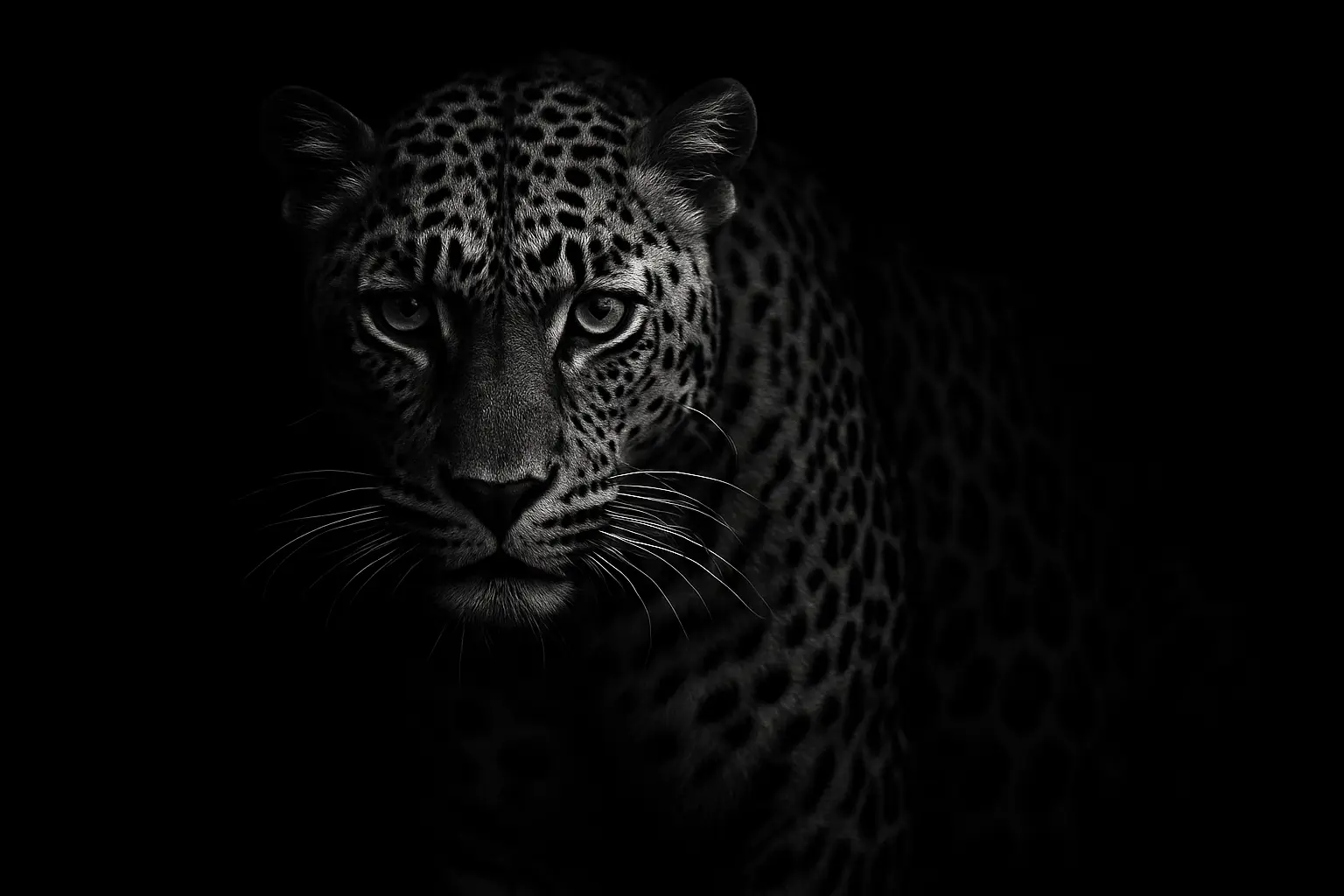
The single most important fact for any wildlife photographer visiting Yala is this: unlike African leopards, Yala's big cats don't face competition from lions or hyenas, making them bolder and more visible. They have habituated to safari vehicles over decades of protected-area management. A Yala leopard will frequently lounge on an open granite inselberg — the park's dramatic dome-shaped rock outcrops — in full daylight, at distances of 15–40 metres, for extended periods. This is simply not replicated at any other location on Earth for this species.
In Africa, leopards are primarily nocturnal and spend daylight hours hidden in dense canopy. In Yala, they sunbathe. The photographic implications are profound.
For the serious photographer, the 6:00 AM dawn patrol and the 4:00 PM golden hour are essential. During these times, the heat dissipates and the cats emerge to lounge on sun-warmed boulders or hunt along the forest fringes.
The Yala Light: What No One Tells You
The photographic quality of Yala's light changes radically across the day — and understanding this is as important as any camera setting.
5:45 AM – 7:30 AM: The Blue-Gold Hour The first light after gate opening is cool, blue-toned, and directional. Leopards and birds are backlit as they move toward the east. This is the finest light for drama — long shadows, rim-lighting on fur, atmospheric dust particles catching the rising sun. The challenge: exposure compensation. Bracket aggressively in this window.
7:30 AM – 10:00 AM: The Working Light Warm, overhead-angled sunlight. This is the most reliable window for sharp, well-exposed animal portraits. The leopards are still active, the elephants are moving, and the light is bright enough for fast shutter speeds without pushing ISO to damaging levels. This is the window where the majority of Yala's great photographs are made.
10:00 AM – 2:30 PM: The Dead Zone Harsh overhead light. Deep shadows under animals. Flat, bleached backgrounds. Most experienced wildlife photographers use this period for rest, reviewing images, or exploring Block 5's shaded forest canopy, which handles midday light far better than Block 1's open scrubland.
2:30 PM – 4:30 PM: The Warming Light As the sun drops west, the quality improves rapidly. Elephants moving toward waterholes catch warm, side-angled light. Crocodiles on lagoon banks become dramatically lit. This is the best window for elephant and waterhole photography.
4:30 PM – 6:00 PM: The Golden Hour The finest light of the day for landscape-wildlife combinations. The park's open grasslands turn amber, the granite rocks glow orange, and any animal caught in this light — leopard, elephant, water buffalo, painted stork — will produce an image with an almost cinematic quality. Afternoon safaris from 2:30 PM to 6:00 PM are often better for leopard movement. As the rocks cool down, the big cats begin to hunt.
Part 2: Gear — The Honest Guide for Yala
The Essential Lens
A 100–400mm or 200–600mm lens is essential. Leopards are often 20–50 meters away.
Let's make this practical:
The Minimum: A 100–400mm f/4.5-5.6 zoom (Canon, Sony, Nikon all produce excellent versions). At 400mm on a full-frame body, you will fill approximately 40% of the frame with a leopard at 30 metres — workable for portraits, tight if you want a full-body shot. This is the minimum effective focal length for meaningful leopard photography at Yala.
The Ideal: A 200–600mm or 150–600mm zoom gives you the flexibility to capture wide environmental shots (leopard on rock with ocean visible behind, the signature Yala image) and tight portraits in the same drive. Sony's 200–600mm f/5.6-6.3 G is currently considered the benchmark for this use case.
The Specialist: A 500mm or 600mm f/4 prime with a 1.4× converter is what professional wildlife photographers bring to Yala. The image quality advantage over zooms is real but the weight and cost penalty is significant.
Crop sensor advantage: If you are shooting with an APS-C body, your 400mm lens effectively becomes 560-640mm equivalent — a genuine advantage at Yala. Don't underestimate a crop sensor camera for safari work.
Stabilisation: The Jeep Problem
Tripods are completely impractical in a safari jeep. The standard solution used by professional wildlife photographers at Yala is a beanbag — a fabric bag filled with lentils or rice, draped over the jeep door or the front bar of an open-sided vehicle. Bring a beanbag to rest your lens on the vehicle's frame.
A beanbag provides superior vibration dampening to a tripod in this environment because it conforms to the jeep's shape and absorbs engine vibration passively. The finest wildlife images from Yala are almost universally shot with a beanbag, not a tripod.
If you don't own a beanbag, they are easy to make: a zip-lock bag filled with rice or dry lentils, sealed and wrapped in a cloth bag. Any well-equipped camera store in Colombo sells purpose-made beanbags.
Protecting Your Gear From Dust
Yala in the dry season produces extraordinary quantities of fine red dust. This is not a minor inconvenience — it is a genuine threat to camera equipment. Yala is incredibly dusty. Use a weather-sealed camera or a "lens sleeve" to prevent grit from entering your gear.
Practical dust protection for Yala:
* Use weather-sealed bodies and lenses wherever possible. Yala's dust is fine enough to enter unsealed equipment through the lens barrel extension during zooming.
* Keep a microfibre cloth in your shirt pocket for continuous sensor cleaning.
* Change lenses inside a dust bag or under a jacket — never in the open air on a moving or recently stopped jeep.
* Use a lens hood at all times. It partially shields the front element from airborne dust.
* Store camera bodies in a sealed dry bag during transit between drives.
Part 3: Camera Settings for Yala Wildlife
The Non-Negotiable Settings
Shutter Speed: Your First Priority A running leopard at 30 metres requires a minimum of 1/1000 sec to freeze motion completely. A stationary leopard on a rock can be sharp at 1/250 sec if your stabilisation is solid. For all moving wildlife — birds in flight, running deer, sprinting jackals — 1/1600 sec or faster is the target.
In Yala's flat, bright morning light from 7:30–10:00 AM, achieving 1/1000 sec at ISO 800 or below with a 400mm f/5.6 lens is entirely achievable. In the pre-dawn blue hour, you will need to compromise — push to ISO 1600 or ISO 3200 and accept some grain in exchange for sharp subjects.
Autofocus: Subject Tracking is Everything Use Animal Eye-AF (if your camera has it) to track leopards through the thick scrub. Modern mirrorless cameras from Sony, Canon, Nikon, and OM System all offer dedicated Animal Subject Detection that works remarkably well even on partially obscured subjects. If your camera has this feature, activate it and leave it on for the entire drive.
For cameras without Animal Eye-AF, use the largest available continuous AF zone combined with AI Servo (Canon) or AF-C (Sony/Nikon) and manually centre on the animal's nearest eye. The eye is always the priority focus point for animal portraits.
Burst Mode: Use It, But Not Recklessly The difference between a great wildlife shot and an average one is often a fraction of a second — the precise moment the animal's head turns, the eye opens, the ear lifts. A moderate burst rate of 6–10 frames per second allows you to capture these moments without generating thousands of near-identical frames to cull later. Avoid spraying at maximum burst continuously — it generates storage and culling workload without proportional image quality improvement.
Exposure Compensation: The Dawn Trap In Yala's early morning light, your camera's metering will consistently underexpose dark-furred animals like sloth bears against bright backgrounds. Dial in +1 to +1.7 stops of positive exposure compensation when shooting a leopard against a bright sky or lagoon background. For animals against dark jungle backgrounds, reduce compensation by -0.7 to -1 stop. Manual exposure is the most reliable approach for experienced photographers — set your base exposure for the background and let the subject fall where it may, adjusting in post.
File Format: RAW Only There is no debate here. Wildlife photography in variable light, with variable subjects, requires the latitude of RAW processing. JPEG shooting at Yala is discarding recoverable information in every frame.
Part 4: Reading Animal Behaviour for Better Photographs
The images that most photographers carry home from Yala are technically fine and behaviourally empty — an animal sitting, staring, existing. The photographs that stand out show behaviour: a leopard mid-yawn, an elephant splashing water, a sloth bear climbing with surprising agility. Getting these frames requires understanding what the animals are about to do before they do it.
Leopard Behaviour Cues
The pre-yawn signal: A leopard that stretches its forelegs forward and dips its head is about to yawn. You have approximately 2–3 seconds. Pre-focus on the face and go to burst mode immediately.
The hunting crouch: A leopard that drops its belly toward the ground, flattens its ears slightly, and fixes its gaze on a point off-frame is initiating a stalk. Keep the shutter moving. The next 30–120 seconds may produce the most dramatic frames of the entire drive.
The tail flick: Leopards flick their tails rhythmically when alert or mildly agitated by the presence of jeeps. A tail that begins flicking more rapidly signals increasing stress — this is the moment to signal your driver to increase the distance, not decrease it.
The rock descent: A leopard that rises from a resting position on a rock inselberg and looks downward is preparing to descend. Position your jeep to anticipate the descent direction — often toward the nearest tree line or water source. The descent itself, with the leopard's full body visible against the rock face, is one of the most photographically powerful moments in Yala.
Elephant Behaviour Cues
Elephants at Yala are most photogenic when interacting with water. Family herds at waterholes produce extraordinary sequences — calves splashing, adults rumbling, trunks curling in contact. Position your jeep at the angle that places the waterhole in the background rather than the scrub, and wait. The herds will move through predictably.
The pre-charge warning: an elephant that spreads its ears fully and faces you directly is delivering a warning. An ear-spread accompanied by a short forward step is a mock charge. Do not photograph this — instruct your driver to reverse quietly and immediately.
Sloth Bear Photography: The Ultimate Yala Bonus
Skilled trackers interpret the frantic alarm calls of Hanuman langurs and the subtle scent markings on the bark of Palu trees to locate sloth bears before they emerge into the open. During the Palu fruit season from May to August, sloth bears climb ironwood trees with an agility that surprises every first-time witness. The photographic challenge is the shade — bears in canopy require significant exposure compensation and fast shutter speeds to freeze their movement. Push ISO aggressively (ISO 3200–6400 on modern sensors handles this) and prioritise a minimum of 1/800 sec.
Part 5: Jeep Positioning for Photography
This is the aspect of Yala safari photography that separates good images from great ones — and it is almost never discussed in travel guides.
The Light Angle Rule
Always position your jeep with the sun behind you relative to the animal. A leopard lit from the front (sun behind the photographer) will have catchlight in its eyes, full detail in its coat, and no blown shadows. A backlit leopard — with the sun behind the animal — creates a silhouette that can be powerful for mood but loses all coat detail and eye expression. In the early morning, this means positioning on the western side of any sighting. In the afternoon, the eastern side.
Before your driver parks at a sighting, ask them to consider the light angle. Many drivers will do this automatically. Some will not. It is worth asking every time.
The Clean Background Priority
The difference between a professional wildlife photograph and a tourist snapshot is frequently the background. Before shooting, check what is behind the animal. A leopard against open sky or a blurred, colour-washed grass background reads as a world-class image. The same leopard with three other jeeps and a dust cloud in the frame does not.
If the background is cluttered, ask your driver to reposition — even 15 metres can transform the background quality through the compression effect of a long telephoto lens. This requires patience and sometimes the cooperation of other drivers at a shared sighting. In Block 5, where jeep numbers are low, this background control is dramatically easier than in Block 1.
Eye Level: The Hardest Thing to Achieve in a Jeep
Wildlife photography is always more powerful when the camera is at the animal's eye level. In a jeep, you are seated considerably above ground level — which means most Yala leopard shots are taken from above the animal, creating an unflattering, diminishing perspective.
The solution: for animals at or near ground level, hang your beanbag as low as possible on the jeep door and shoot from a low seated position, angling the lens downward toward the animal level. Some jeeps at Yala can be arranged with front-seat or lower-position shooting for dedicated photographers — ask your operator in advance.
Part 6: Ethical Wildlife Photography at Yala
This section is not optional. It is the most important part of this guide.
A photographer who has watched jeep drivers move closer and closer to a resting leopard at visitor insistence describes hearing "closer, closer, I can't see around the other jeeps, I want a better photo" repeated hundreds of times — and notes that eco-tourists must take some responsibility, not just the drivers.
The Ethical Standards for 2026
Never pressure your driver for closeness. The mandatory 30-metre minimum distance exists for the animal's welfare, not for your inconvenience. A photograph taken from 30 metres with a 400mm lens is not inferior to one taken from 15 metres. At 30 metres with 600mm equivalent, the leopard fills the frame completely.
Never encourage off-road driving. Never encourage your driver to speed or go off-road for a photo. Off-road driving destroys nesting habitat, destabilises root systems, and is illegal under park regulations. No photograph is worth this.
Silence at sightings. A leopard that turns its head toward the jeep in response to sound is being disturbed. Whisper or use hand signals to communicate with your driver at all active sightings.
No flash, ever. The use of camera flash at Yala is prohibited and ethically indefensible. The disorientation caused by flash to nocturnal and crepuscular animals is well-documented. If your light is insufficient for a sharp exposure, accept the blur or increase the ISO.
The tail-flick signal. A leopard whose tail begins to flick rapidly is displaying stress at the vehicle's presence. This is the signal to move back, not to move in for a closer shot. The most ethical response to a tail-flicking leopard is to instruct your driver to reverse and find a more comfortable angle for the animal.
Part 7: The Best Months for Yala Photography
February – May: Peak Leopard Photography Season ★★★★★
Dry conditions concentrate animals at waterholes. Leopards are most reliably visible on open rocks and tracks. The vegetation is sparse enough that sight lines are long and backgrounds are clean. Morning mist in February and March creates extraordinary atmospheric conditions for the first 30 minutes after sunrise — a small photographic window that rewards the earliest gate arrivals.
May – August: Sloth Bear and Elephant Peak ★★★★★
New moon periods are particularly favorable, as leopards exhibit increased activity in darker conditions. The Palu fruit season brings sloth bears into open canopy positions that are genuinely rare anywhere in Asia. Elephant herds are large and reliably found at permanent waterholes. The combination of species diversity and photographic opportunity is exceptional.
November – February: Bird Photography Season ★★★★
The wetland birds at Yala during the northeast monsoon include greater flamingo, painted stork, lesser adjutant stork, black-necked stork, and dozens of migratory species arriving from Europe and Central Asia. For bird photographers, this is Yala's finest window — and the least crowded. The green, freshly washed vegetation background also produces different and striking colour palettes compared to the bleached dry season landscape.
Part 8: What to Do With Your Images
Storage on Safari
Carry twice as many memory cards as you think you need. A full-day of burst-mode wildlife shooting at 20–30 megapixels can fill a 128GB card in a single morning drive. Use V90-rated UHS-II cards for the fastest write speeds — this eliminates the buffer delay that can cause you to miss the critical second frame of a burst during a fast-moving sighting.
Back up every evening. A portable SSD or dual-card simultaneous writing setup provides insurance against the card failure that always happens at the worst possible moment.
Post-Processing for Wildlife
Wildlife photography at Yala typically requires three adjustments in post-processing: recovering shadow detail in dark-furred animals against bright backgrounds (use selective shadow recovery rather than global adjustments), noise reduction for the high-ISO frames from the pre-dawn golden hour, and colour correction for the warm orange cast that the red dust of Yala adds to everything during dry season afternoon drives.
Adobe Lightroom's AI Denoise feature has transformed the usability of ISO 3200–6400 frames from Yala — images that previously required significant compromise now produce gallery-worthy results after processing.
Quick-Reference Photography Checklist for Yala
Before You Go
* Charge all batteries fully — charge your backup battery, then charge the backup to your backup
* Format memory cards
* Test autofocus tracking on moving subjects at home
* Pack beanbag, dust cloth, and sealed storage bags
* Set camera to RAW + continuous AF tracking mode
At the Gate
* Arrive by 5:15 AM for morning sessions
* Mount beanbag on jeep door before entering
* Set base exposure for the ambient light conditions
* Enable Animal Eye-AF if available
At a Sighting
* Check light angle before shooting — reposition if needed
* Check background — request driver repositioning if needed
* Watch for behaviour cues before pressing the shutter
* Monitor the animal's stress signals continuously
* Never request the driver to move closer than 30 metres
Post-Drive
* Back up cards to portable SSD immediately
* Wipe lens elements with microfibre cloth
* Seal camera in dust bag for jeep transit
The Image You Will Carry For Life
Every photographer who visits Yala describes the same experience: there is a moment — usually in the first 90 minutes of the morning drive, usually involving a leopard, usually in light so perfect it seems staged — where they realise they are looking at something that should not be this accessible. A wild apex predator at 25 metres. Eye contact. Complete mutual indifference from the animal. The shutter firing.
The technical preparation makes the difference between that moment producing an image worth framing and one worth forgetting. Bring the right lens. Use the beanbag. Read the behaviour. Respect the distance. Trust the light.
The rest, Yala will provide.
Last updated: May 2026 | Based on verified 2026 wildlife photography data, current Yala park regulations, and real photographer accounts from Yala National Park, Sri Lanka.
Ready to see this in real life?
Book your Yala safari today and experience the magic firsthand.
Explore Packages